
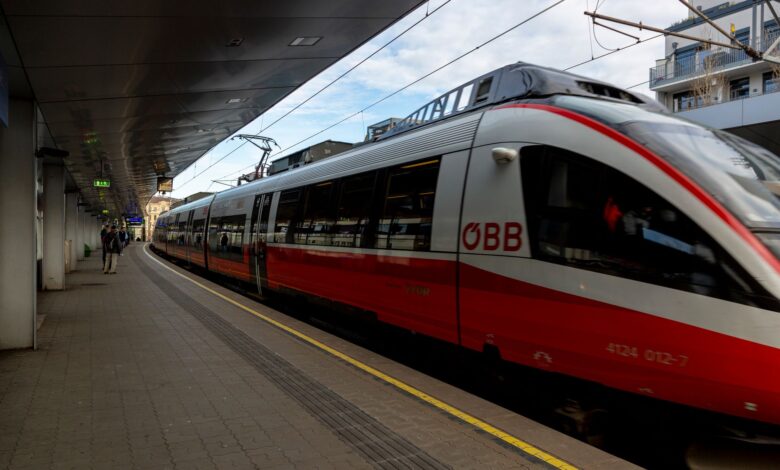
2 Weeks in Europe Itinerary: Five Classic Routes Compared by Transit Time, Not Landmarks
Fourteen days is enough to see a lot of Europe, but the route that shows you the most of it is almost never the one with the most cities on it. Cap your 2 weeks in Europe at three home bases and you hand yourself back well over a full day of daylight, because the cost of a move is never just the train ride. Packing, checking out, getting to the station, the boarding buffer, the arrival station and a room that isn’t ready until mid-afternoon all come out of the same fourteen days.
That trade-off is not the same on every corridor, which is why the choice between five classic routes is really a choice about hours. Two cities three hours apart on a direct high-speed train cost you an afternoon; two cities with an international check-in desk between them can cost most of a day for the same distance on the map. It is the correction that lands hardest in traveller communities: replying to one five-stop plan on r/travel in early 2026, one commenter put it as “one day” is not one day. Travel takes at least half a day. Those hours are not spread evenly across the classic routes, and the map shows you none of them.
The Half-Day Transit Tax: Why 2 Weeks in Europe Supports 3 Bases, Not 6
Start with the arithmetic that itineraries get wrong. A day-by-day plan counts nights, and you read it as days. Those are not the same number: a two-night stop gives you one full day plus the scraps of two travel days, so a route with five two-night stops is not five cities in fourteen days, it is five cities in roughly eight usable ones. Every rule, fee and journey time below was checked in September 2026 and is set by operators and national authorities who can change it, so confirm your own dates and route on the operator’s or authority’s own page before you book anything.
The gap between nights and days comes from a fixed overhead that attaches to every base change, and it barely shrinks when the train ride does. French Railways advises passengers to be at the station 20 minutes before a TGV, Intercités or TER departure, with access to the train guaranteed only up to two minutes before — modest on its own, but it sits on top of the packing, the checkout, and the ride across town with luggage.
At the far end the same thing happens in reverse: another city transfer, then the wait for a room. Your own booking confirmation carries both ends of that gap, and it is worth opening before you commit to a route — look at the check-out time on the first hotel and the check-in time on the second, and the hours between them are hours you have already spent.
That overhead is why a timetable search flatters a route. The default connection settings in journey planners allow the minimum time to change trains, and as rail specialist Mark Smith explains on Seat 61, the system always allows enough time to walk between trains if the first one is on time, but it does not allow for delays and does not make the risk assessment a traveller should. He suggests resetting transfer time to at least 40 minutes. The planner is answering a question about trains. You are asking a question about your day.
Put the two together and a realistic door-to-door figure for one base change in Western or Central Europe runs to roughly four to six hours, depending on the leg — approximately, and only as a planning estimate, since station distances, luggage, and the hotel’s own timings all move it. This is a planning model built for this guide from three things you can check yourself: the scheduled journey time, the operator’s published station-arrival advice, and the check-in and check-out times on your own bookings. It is not an industry standard, and it is not a measurement.
The consequence is a cap rather than a target. Three bases across fourteen days leaves roughly eleven to twelve days on the ground; five bases leave closer to eight, spread thinner.
That is the same conclusion experienced travellers keep reaching from the other direction. On the Rick Steves travel forum, a long-standing member answering a five-stop Italy-to-Amsterdam plan wrote that every time you switch cities like that, at least 1/2 day evaporates, and that most of the forum reckons on accomplishing very little on a travel day. A Tripadvisor destination expert for Rome, answering an eight-city, three-country plan on the Italy forum, set the ceiling lower still for multi-country trips: four cities at most for two weeks, three if more than one country is involved.
Here is the part the ranking guides miss, and it is worth naming because it is a contradiction rather than an omission. Several of them state the half-day rule correctly and then ignore their own arithmetic. One widely-read first-timer guide tells readers that transit between cities takes at least half a day once you factor in checking out of one hotel and into the next, and recommends a minimum of two to three days per city — then builds its flagship fourteen-day route around six cities in five countries. Both halves cannot be true at once. The advice is right; the itinerary underneath it was never costed.
None of this makes a fourth base wrong. It makes it expensive, in a currency the plan does not display, and the price varies enormously by corridor. Which is where the five classic routes stop being interchangeable.
One caveat before the routes, because it applies to every figure below. Entry rules, border-check requirements, fares, and timetables all change without notice, and none of them care when an article was published. Everything here was verified on 20 September 2026 and is dated where it matters. Before you book, confirm your own case against the operator’s own site for train rules and against the issuing authority — your destination’s consulate or the official EU travel portal — for anything involving passports and borders. A blog is a starting point, never the authority.
Route 1: The Western Europe Capital Corridor (London, Paris, Amsterdam)
Eurostar runs both legs of this route, and it asks you to show up at very different times for each. For trains to and from London, Eurostar’s own arrival guidance, checked on 20 September 2026, recommends 75 minutes at London St Pancras International and 75 to 90 minutes at Paris Gare du Nord in Standard and Plus. For its trains between Belgium, France, the Netherlands and Germany, the same page recommends 20 minutes. Same company, same kind of train, and roughly an hour’s difference in what the day costs you.
The reason is stated plainly on that page: travelling to and from London means passport and luggage checks before you board. The United Kingdom is not in the Schengen area, so the London legs carry a full border, and Eurostar clears it at the departure station rather than on arrival. Paris to Amsterdam stays inside Schengen, and there is nothing to clear. That single difference, not the speed of the train, is what separates the two halves of this corridor.
It shows up in the arithmetic. London to Paris is advertised at 2 hours 16 minutes, though the services in Eurostar’s published schedule for late September 2026 mostly run 2h24 to 2h35, and Paris to Amsterdam is 3 hours 20 minutes direct. Add the station buffers each leg actually demands, the two city transfers, the packing and the check-in wait, and two moves on this route work out at roughly ten to twelve hours door to door in total — an estimate, since station distances and hotel timings move it. Against fourteen days that is not painful. It is simply more than a route that never crosses a hard border.
One number on that page matters more than the recommended arrival time, because it is the one that is enforced rather than advised: the ticket gates close 30 minutes before departure at St Pancras, Gare du Nord and Amsterdam Centraal in Standard and Plus. Recommended arrival is guidance; the gate is a door.
On r/Eurostar in January 2026, one traveller who reached the St Pancras scanners 28 minutes before departure reported that “they didn’t allow me on the train anymore” and was put on a later service. Another in the same thread described security taking 45 minutes on their most recent trip. Neither account tells you how common that is, and neither is a rule — the rule is the 30-minute gate, and it is the reason the published buffer is as long as it is.
The London end also carries a document the other two cities do not. UK Visas and Immigration states that most visitors need either an electronic travel authorisation or a visa to enter the United Kingdom, that what you need depends on your nationality and your reason for travelling, and that travellers from Europe, the USA, Australia, Canada and certain other countries usually need the authorisation rather than a visa. As checked on 20 September 2026 it costs £20, covers stays of up to six months, is required for every traveller including babies and children, and — in the government’s own words — does not guarantee entry to the UK. Holders of British or Irish passports do not need one.
An electronic travel authorisation is not a visa and it is not a substitute for the border officer’s decision; it is permission to travel, checked before you board. Which nationalities need one changes, so run your own passport through the official eligibility checker rather than relying on a summary, and apply on the government site itself, which warns that other websites may charge more and that some imitate government services.
That document requirement is also an argument about route order. Because the border sits at the London end, entering or leaving the corridor through Paris or Amsterdam keeps the expensive leg to one rather than two, and a London–Paris–Amsterdam line flown open-jaw crosses it exactly once. Where this route genuinely strains is in the middle: Paris rewards more days than a three-base split usually leaves it, and how many days in Paris you actually need is a question of arrival timing, museum closing days and day-trip distances rather than route geometry, which is why it belongs in its own guide rather than here.
So this corridor buys you three of Europe’s most-visited capitals and pays for them in border time. The Italian spine answers the same question with the opposite geometry.
Route 2: The Italian Rail Spine (Rome, Florence, Venice)
Take the border out and the same three-base shape gets noticeably cheaper in hours. Rome, Florence and Venice sit on one line, in one country, with high-speed trains between central stations and nothing to clear in between. Italo publishes Roma Termini to Firenze S.M. Novella at 1 hour 25 minutes non-stop, with 32 trains a day in each direction and fares from €14.90; Firenze S.M. Novella to Venezia S. Lucia runs 2 hours with 11 daily departures and fares from €18.90, as checked on 20 September 2026.
Trenitalia’s Frecciarossa covers the same spine, and both operators say there is no check-in before boarding. Trenitalia’s cheapest advance tier, Super Economy, is valid on Frecciarossa, Frecciargento, Frecciabianca and Intercity services in every class except Executive, and the operator now lets you refund it through its tiRimborso option — a change worth knowing about, because the cheap advance fare used to be the one you simply lost if plans moved.
That last point is the whole difference. Where Eurostar’s London legs need 75 minutes at the station because there is a border to clear, an Italian domestic departure needs roughly the fifteen to twenty minutes it takes to read the board and find your platform. Two moves on this route come to something like seven to eight hours door to door against ten to twelve on the capital corridor — a rough planning figure rather than a measurement, but the gap is large enough that it survives a generous margin. Over fourteen days that is most of an extra day on the ground.
Frequency does quiet work here too. Thirty-two Rome–Florence departures a day means a missed train is an inconvenience rather than a lost afternoon, and it means you can put the move at whatever hour suits the day rather than building the day around one departure. Eleven Florence–Venice departures is thinner, and worth checking against your actual date before you assume a late-morning option exists.
The route has one genuine transfer cost, and it is at the Venice end rather than on the train. Venezia Santa Lucia sits on the Grand Canal inside Venice itself, which sounds like the best possible arrival and is — but there are no cars. As the Seat 61 station guide sets out, the Rialto Bridge is a 1.6 km walk from the station and Piazza San Marco is 2.2 km, the vaporetto from the Ferrovia stop outside runs roughly every twelve minutes at €9.50 a single ride, and a water taxi to San Marco is in the region of €80. With luggage, that last kilometre is the slowest kilometre of the whole route.
Booking near the station is not a downgrade on this itinerary; it is the thing that keeps the Venice leg cheap in time.
The fake ticket office at Venezia Santa Lucia
Worth knowing before you walk in, because it costs money rather than time. The first counter you see on the outer concourse at Santa Lucia is Agenzie 365, a travel agency branded with Trenitalia logos and red Frecce livery — and, as the same station guide points out, it adds a booking fee to every ticket.
The real Trenitalia and Italo ticket offices are further in, off the outer concourse. If the counter in front of you as you enter is the one you use, you have probably paid more than the fare. This is also an argument for buying the two intercity legs online before you leave home, which you would want to do anyway for the advance fares above.
There is a second, smaller cost that catches people who plan Venice as a day trip from a mainland base. Venice charges day trippers an access fee on certain dates, introduced in January 2023, and there is no fee if you stay overnight in the city because the hotel bill already carries the visitor tax. Dates and payment are handled through the city’s own access-fee service, and since the scheme’s dates change year to year, that is the page to check rather than a summary. Staying in Venice rather than Mestre is therefore both the faster option and, on the days the fee applies, not necessarily the dearer one.
This corridor is also the one the communities keep recommending to people who arrive with too many pins in the map. In the r/travel thread on a seven-city, thirteen-day plan, one reply to a route that included Rome and Venice via overnight buses was to pick a country and give it a chance, naming Rome, Florence and Venice as the three that would fill the fortnight. The post dates from 2020 and the fares have moved since, but the geometry has not.
So Italy buys back hours that the capital corridor spends at a border. What it does not buy is variety of country — and that is exactly the trade the Central European arc splits down the middle.
Route 3: The Imperial Central Europe Arc (Prague, Vienna, Budapest)
Here’s the counterintuitive one. This route crosses three countries and has less border friction than the London–Paris–Amsterdam corridor, which crosses two. Czechia, Austria and Hungary are all inside the Schengen area, so the Railjet that carries you from Prague to Vienna to Budapest doesn’t stop for anyone to look at your passport. You get on, you sit down, you arrive in a different country. Nobody checks in.
The legs are longer than Italy’s. Prague to Vienna runs around four hours on the direct Railjet and Vienna to Budapest under three, as a planning estimate rather than a promise — check your actual date, because timings shift with engineering work and seasonal timetables. But long legs without border buffers behave very differently from short legs with them. A four-hour train you board fifteen minutes before departure costs you less of a day than a two-hour train you board seventy-five minutes before departure.
Where this route genuinely wins is price, and the mechanism is worth understanding rather than just quoting. ÖBB’s advance fare is called Sparschiene, and on Sparschiene Europe the operator lists short cross-border routes from €4.90 in second class and €9.90 in first, per person each way, as checked on 20 September 2026. You can book up to six months — 180 days — before departure, and ÖBB is explicit that the cheapest seats are limited in number and go early.
The €5 that buys you a different trip
Now the part most itineraries skip. A plain Sparschiene ticket is train-specific: ÖBB states that each ticket is valid only for the train selected during booking, and that there is no cancellation or refund. Miss it and you’ve bought a new ticket.
Sitting alongside it is Sparschiene Komfort Europe, listed from €9.90 in second class. That version includes a seat reservation and cancellation rights — refunds free of charge up to 15 days before your first travel day, then a 50% fee up to the day before.
So the real question isn’t “which is cheaper.” It’s which leg you’re least certain about. On a fortnight booked four months out, the difference between the two tiers is roughly the price of a coffee, and what it buys is the ability to change your mind. Locking the Prague–Vienna leg to a named train in January, when you haven’t yet decided whether Prague deserves four nights or five, is how people end up eating a fare. Buying the flexible tier on the one leg you’re least sure about, and the cheap locked tier on the legs you’re certain of, is the version of this advice that survives contact with a real trip.
This is also the gap in the standard write-ups of this region. Earth Trekkers’ Central Europe itinerary is genuinely good on what to see and how long to spend seeing it, and it is silent on the fare mechanics — which train your ticket is welded to, what happens when you want to move it. That silence is where the money leaks.
Route 4: The Iberian High-Speed Triangle (Madrid, Seville, Barcelona)
Spain is the route where the map lies to you. Madrid to Seville on the AVE is quick — roughly two and a half hours as a planning figure — and it flatters the whole itinerary. Then you look at Seville to Barcelona and find something closer to six hours on the direct service, because you’re crossing the entire country diagonally. That single leg is the reason this triangle costs more transit time than Italy or Central Europe, and no amount of routing cleverness makes it disappear.
There are three honest ways to handle it, and they’re all defensible. Accept it as a genuine travel day and put it mid-trip, when you’re tired anyway and a long sit-down with scenery is welcome. Or reorder the triangle so Madrid sits in the middle and you never fly the long diagonal at all. Or fly that one leg — which sounds like heresy in an article about trains, but the honest arithmetic is that once a rail leg passes about five hours, the door-to-door gap against a short flight narrows enough that it becomes a preference question rather than a maths question.
What you should not do is pretend the leg is shorter than it is and schedule a museum for that evening.
Bring your passport to the train station
Spain has a ticketing quirk that catches visitors, and it’s on Renfe’s own page. Tickets for AVE and long-distance trains are nominative — issued to a named person — and Renfe tells you to carry valid photo identification, listing DNI, driving licence, residence card or passport. Identity checks, it says, can happen during the check-in process or on board. For a foreign visitor, that effectively means your passport travels to the station with you, not in the hotel safe.
That phrase “the check-in process” is itself the tell. Spanish high-speed departures involve a station procedure in a way that Italian or Austrian domestic departures don’t, so the fifteen-minute buffer that works in Florence isn’t the right number in Madrid. Budget more, and budget it on both ends.
Renfe also restructured its fares, dropping the old Turista and Preferente classes for three options: Básico, Elige (Pick & Mix) and Prémium. Básico is the cheapest and the most rigid — standard seat, with changes, cancellations and even seat selection charged as extras. Elige is the only tier that lets you pick your seat type. Prémium includes a comfort seat and food served at your seat, and carries one clause that matters disproportionately on a packed itinerary: Renfe says you can change your booking even when you have missed your train.
Read that as insurance rather than luxury. On a fortnight where one missed connection cascades into a lost hotel night, the tier that forgives a missed departure is doing something a cheaper ticket can’t, and the premium is often smaller than the night you’d forfeit. On the legs where your schedule has slack, Básico is the right answer and the extras are noise.
Route 5: The Grand Continental Whirlwind (London, Paris, Lucerne, Venice, Rome)
This is the itinerary people actually want, and it’s the one this article exists to argue you out of.
Five bases in fourteen days means four intercity legs, and these aren’t Florence-to-Venice hops — London to Paris, Paris to Lucerne, Lucerne to Venice, Venice to Rome is a diagonal traverse of the continent. Apply the same door-to-door accounting from the top of this article and the modelled total lands somewhere around twenty-five hours of pure transit, with the Eurostar leg carrying its seventy-five-minute border buffer and the Alpine legs running long. These are estimates built from the same components as the earlier routes, not measurements, but the order of magnitude is not in dispute.
Then add the part nobody counts: five hotel changes. Five mornings that end at a reception desk instead of a café, five afternoons that start with a suitcase. Between the transit hours and the packing days, you’re looking at roughly three vacation days consumed by logistics, leaving something like a day and a half per city.
A day and a half in Rome.
The travel forums are unsentimental about this. When one r/travel poster laid out a seven-city, thirteen-day plan, the top response called it very check-boxy and unrealistic and cut it to a maximum of four. In another thread on a two-week Europe plan, the advice was blunter still — pick two, maybe three cities, because the poster couldn’t imagine wasting that much time on transfers. These aren’t cranks. They’re people describing the trip they already took.
There’s a specific failure mode worth naming, because it’s the one that turns a tiring trip into a bad one. Compression doesn’t distribute evenly — it lands on the last two cities. By Venice you’re running on laundry you haven’t done and sleep you didn’t get, and the city you were most excited about gets the worst version of you. People don’t regret the hours on the train nearly as much as they regret arriving at St Mark’s too tired to care.
If you genuinely want all five, the fix isn’t a cleverer route. It’s three weeks, or two trips.
The 5 Routes Compared: Transit Hours, Net Sightseeing Days, and Route Decision Tree
Put the five side by side and the pattern is hard to miss. Every figure below is an approximate planning estimate built from the door-to-door components in the first section — packing, checkout, the ride to the station, the operator’s own boarding buffer, the scheduled journey, the arrival transfer, and check-in. They’re modelled, not measured, and your own numbers will move by an hour either way depending on where you sleep.
| Route | Bases | Long legs | Approx. transit, door to door | Approx. days on the ground | Border friction | The thing that costs you |
|---|---|---|---|---|---|---|
| 2. Italian Rail Spine — Rome, Florence, Venice | 3 | 2 | ~7–8h | ~12 of 14 | None (one country) | The last kilometre into Venice, on foot or by vaporetto |
| 3. Imperial Central Europe — Prague, Vienna, Budapest | 3 | 2 | ~9–10h | ~11.5 of 14 | None (all Schengen) | Longer rides; cheap fares welded to one named train |
| 1. Western Capitals — London, Paris, Amsterdam | 3 | 2 | ~10–11h | ~11.5 of 14 | Heavy (UK border, both ways) | 75-minute check-in on a 2h16 journey |
| 4. Iberian Triangle — Madrid, Seville, Barcelona | 3 | 2 | ~12–13h | ~11 of 14 | None (one country) | One ~6h diagonal that nothing can shorten |
| 5. Continental Whirlwind — London, Paris, Lucerne, Venice, Rome | 5 | 4 | ~25h | ~8.5 of 14 | Heavy, plus Alpine legs | Five hotel changes, and the fatigue lands on Rome |
Read the last two columns together and the whole argument of this article sits in one row. The Whirlwind isn’t bad because twenty-five hours is a lot of hours. It’s bad because those hours come out of the same fourteen days as everything else, and it hands you roughly three and a half fewer days of actual Europe than the Italian spine does — while costing more, because every long leg is a fare.
Each route has a real drawback, so here they are without spin. Italy is the most efficient and the least varied — one country, one language, one national rail operator, and if you wanted three cultures you won’t get them. Central Europe is the best value and asks you to sit on trains longer.
The Western capitals deliver the three most famous cities on the list and spend a full extra afternoon at borders to do it. Iberia has the best single-country high-speed network and one leg that’s simply long. And the Whirlwind gives you five bucket-list pins and the least time in every one of them — that’s the option we’d actively steer you away from, not because it can’t be done, but because people who do it tend to describe it afterwards as a blur.
Disclosure: Happy Day Turismo sells and books European travel, including trips along several of these corridors. That’s a commercial interest, so treat the reasoning above as something to check rather than something to trust — every operator figure here links to the operator’s own page precisely so you can verify it without taking our word for anything.
Which route is actually yours
Work down these questions in order and stop at the first one that fits.
Is this your first trip to Europe, and do you want the postcard cities? Take the Western Capitals, and go in knowing you’re buying fame at the price of border time. Book the Eurostar legs early, treat each one as a half-day, and don’t schedule anything you’d be sad to miss on a travel afternoon.
Do you want the most hours on the ground for your money? Italian Rail Spine. It’s the efficiency winner by a clear margin, the fares are the cheapest to verify, and the frequency means a missed train is an annoyance rather than a crisis.
Is budget the binding constraint? Imperial Central Europe. Advance cross-border fares start lower than anywhere else on this list, the three capitals are cheaper on the ground than Paris or Amsterdam, and the Schengen membership means the longer rides come without border overhead.
Do you specifically want Spain, or are you travelling in summer heat? Iberian Triangle — with the diagonal leg placed deliberately rather than accidentally, and your passport in your day bag.
Do you want all five cities? Then the honest answer is that you want a three-week trip, and the useful thing this article can do is tell you that now, while the flights are still refundable.
Eurail Pass vs. Point-to-Point Tickets: The Real Math Behind Seat Reservations and Fare Rules
First, a naming change that confuses people mid-search. If you go looking for a Eurail Pass today you land on a page that says, in the operator’s own words, “Eurail is now Interrail — Looking for Eurail? You’re in the right place. Same Pass, same way to explore Europe by train.” Same product, one brand. If a comparison site is still presenting them as two competing options, it’s out of date.
Now the number everyone repeats, and the asterisk almost nobody adds. Interrail’s own page lists the Global Pass as starting at €212, with One Country Passes starting at €50, checked on 20 September 2026. That word starting is doing heavy lifting: the entry price is the cheapest tier across all traveller categories — the youth fare — and an adult buying the same four-days-in-one-month flexi pass should expect to pay meaningfully more. Price your own category before you budget anything. A guide that quotes €212 at a 40-year-old reader has quietly under-costed their trip.
There’s a second trap in the same place. The operator’s own Italy trip idea — eight travel days in one month — is listed from €219, which is more than the Global Pass entry price. “One country must be cheaper than all of Europe” is an intuition, not a fact, and it’s worth ten minutes of checking.
The pass price is not the price
Here’s the part that decides the question. A pass buys you the right to travel; it does not buy you a seat. On high-speed and international services — exactly the trains all five of these routes run on — a seat reservation is mandatory and charged on top. Interrail is straightforward enough about this that it publishes a guide to travelling between popular European cities without reservations, which tells you how much the reservation problem shapes real pass itineraries.
So compare like with like:
| Rail pass | Point-to-point advance fares | |
|---|---|---|
| Headline cost | Global Pass from €212 (entry tier; adults pay more) | Italy: Italo from €14.90 + €18.90 = €33.80 for both legs |
| Plus reservations | Mandatory and extra on high-speed and international trains | Included — the fare is the seat |
| Central Europe | Same pass, same reservation problem | ÖBB Sparschiene Europe from €4.90 per leg |
| Flexibility | Change trains freely, subject to reservation availability | Cheapest tiers are locked to one named train |
| Refunds | Pass refund policy is separate from reservations | Varies: Sparschiene none; Komfort refundable; Trenitalia Super Economy refundable via tiRimborso |
| Best suited to | Many moves, long distances, spontaneous routing | Two or three planned legs booked in advance |
All figures verified on operator pages on 20 September 2026; fares are starting prices with limited availability, per person each way.
For the three-base routes this article recommends, the maths isn’t close. Two Italian legs on published advance fares come to under thirty-five euros. Two Central European legs start under ten. Against a pass entry price of €212 before a single reservation fee, point-to-point wins so decisively that the comparison is almost unfair.
And that’s the irony worth sitting with. A rail pass is a genuinely good product — for someone making eight or ten moves, roaming without fixed dates, deciding at breakfast where to sleep that night. That is precisely the trip shape the transit arithmetic in this article argues against for fourteen days. The pass isn’t overpriced. It’s optimised for a different holiday than the one you should probably take.
Two conditions flip it back. If you’re under 28 the youth pricing changes the sums materially. And Interrail has a Plus Pass in beta that bundles seat reservations into the pass price on most trains — if that’s available for your route when you book, it removes the single biggest hidden cost in the comparison above, and the calculation deserves redoing from scratch.
Open-Jaw Flights vs. Round-Trip: How “Multi-City” Booking Saves a Full Day of Vacation
Every route in this article is a line, not a loop. You start in Rome and finish in Venice, or start in London and finish in Amsterdam. Book a standard return flight and you’ve quietly committed to undoing that line — travelling all the way back to where you started, on a day you were counting as holiday.
Someone on r/travel put the cost of that mistake plainly, advising a poster not to waste five-plus hours on the train from Amsterdam to London just to get on a plane. That’s the whole problem in one sentence. The backtrack isn’t a travel day. It’s a day you spend returning to a city you already finished with, to board a flight you could have boarded where you already were.
The fix is a booking-form setting, not a strategy. Nearly every airline site and search engine offers Multi-city (sometimes “multiple destinations”) next to Return and One-way. Put your arrival airport in the first row and your actual departure airport in the last, and you’ve booked what the industry calls an open-jaw: into Rome, home from Venice. The trip becomes the shape it always was.
Price it three ways before you decide
The reason people don’t do this is a belief that multi-city costs more. Sometimes it does. The mistake is comparing it against the wrong thing — a bare round-trip fare, rather than the round-trip plus everything the backtrack costs you. Price all three before you decide:
- Round-trip, plus the return train or budget flight back to your start city, plus a possible extra hotel night at that end, plus the day itself.
- Multi-city / open-jaw, in and out of different cities.
- Two one-ways, which occasionally beats both and occasionally is far worse.
Run those totals and the open-jaw often wins outright. When it doesn’t, it usually loses by less than the backtrack leg costs — at which point you’re paying a small premium to buy back an entire day of your fortnight, which is a trade most people take happily once they see it written down.
One caution worth keeping. Two separate one-way tickets are two separate contracts, and nobody is responsible for the second if the first runs late. A single multi-city booking on one reference number is one contract. On the way home that distinction rarely bites, but it’s the reason to prefer the multi-city booking over two one-ways when the prices land close.
Schengen and Border Logistics: 90/180-Day Rule, Passport Validity, and ETIAS Status
Two weeks sits comfortably inside every limit here. It’s still worth ten minutes, because two of these rules refuse entry at the border rather than generating a polite warning, and one of them is currently attracting scam websites.
Jurisdiction: EU / Schengen Area. All statements below verified against the European Union’s official travel portal on 20 September 2026.
The 90/180 rule. Short stays in the Schengen area are capped at 90 days in any 180-day period. A fortnight uses fifteen of those days. This only becomes live if you’ve already been in the Schengen zone recently — the window is rolling, so a trip in May counts against a trip in September. One wrinkle the EU flags specifically: time spent in Cyprus is calculated separately and doesn’t count against the 90 days you can spend in the other participating countries.
Passport validity. This is the one that actually strands people. The EU’s own guidance is to make sure your passport is valid for three months after your intended departure from the countries concerned, and states you’ll be refused entry at the border if it isn’t, with some exceptions. Note the shape of the rule: three months past the day you leave, not the day you arrive. A passport expiring in December is not sufficient for a trip ending in November. Check yours before you book anything, because passport renewal is the single slowest item on any trip checklist.
ETIAS — and this is the important one. As of 20 September 2026, the European Union’s official portal states verbatim that “ETIAS is currently not in operation and no applications for travel authorisations are collected at this point,” and that the EU will announce the start date several months before launch.
Read that twice, because it has a direct consequence: any website currently inviting you to apply and pay for an ETIAS authorisation is not legitimate. There is no application to make right now.
When the system does go live it will apply to visa-exempt nationals travelling to 30 European countries, cost €20 with some travellers exempt, and be linked to the passport you applied with — valid for up to three years or until that passport expires, whichever comes first. Most applications are expected to process within minutes, though the EU allows for four days, extending to 14 if they request more documents or 30 if they call you to an interview. When it launches, apply from the official EU portal and nowhere else.
Check your own nationality, not this article. The rules above are the EU’s framework for third-country nationals and visa-exempt travellers as a class. Which category you personally fall into — visa-exempt, visa-required, or exempt from ETIAS entirely — depends on the passport you hold, and that determination belongs to the issuing authority, not to a travel blog. Confirm your specific case on the official EU travel portal and with the consulate of your destination country before you book. Entry rules change without notice, and the border guard’s copy is the one that counts — a valid authorisation has never guaranteed entry, and the EU says so explicitly.
Two Weeks, Three Bases, and the Hours You Get Back
The choice that decides this trip isn’t which cities you pick — it’s how many, because every extra base charges you half a day whether or not the train ride is short. Count the door-to-door cost of each move the way this article does, and the fourteen-day itinerary that survives is almost always three bases, occasionally two, and never six. Do that arithmetic before you book the flights, while the shape of the trip is still free to change. And do one thing before any of it: open the official EU travel portal and check your passport against the three-months-beyond-departure rule, because it’s the only item on this list that a renewal queue can’t fix in the week before you fly.
Frequently asked questions
How far in advance should I actually book the trains?
Earlier than most people do, because the cheap fares are capped in number rather than released on a schedule. ÖBB opens Sparschiene bookings up to six months — 180 days — before departure and says outright that the lowest prices are limited and go first. Italo and Trenitalia work the same way: the advance fares quoted in this article are starting prices with limited availability, not the price you’ll see a fortnight out. Book the legs as soon as your dates are firm, and on the one leg you’re least sure about, buy the flexible tier instead of gambling.
What happens if I miss my train on the cheapest ticket?
It depends entirely on which operator, and the differences are sharp enough to plan around. ÖBB’s plain Sparschiene is valid only on the specific train you booked and carries no cancellation or refund — miss it and you buy again. Sparschiene Komfort is refundable free of charge up to 15 days before travel, then at a 50% fee. Trenitalia’s Super Economy, historically the strictest tier in Italy, can now be refunded through its tiRimborso option. And Renfe’s Prémium fare is the most forgiving on this list: it lets you change a booking even after you’ve missed the train. On a tight connection day, that clause is worth more than the seat.
Can I avoid seat reservation fees if I do buy a pass?
Partly, and the operator will help you do it. Reservations are mandatory and charged separately on most high-speed and international services, which is the cost that quietly breaks pass maths — but Interrail publishes its own guide to travelling between popular European cities on routes that don’t require them, built around slower regional and intercity trains. Those routes take longer, so you’re trading transit hours for reservation fees, which on a fourteen-day trip is usually the wrong way round. There’s also a Plus Pass in beta that bundles reservations into the pass price on most trains; if it covers your corridor when you book, price it before defaulting to point-to-point.
