
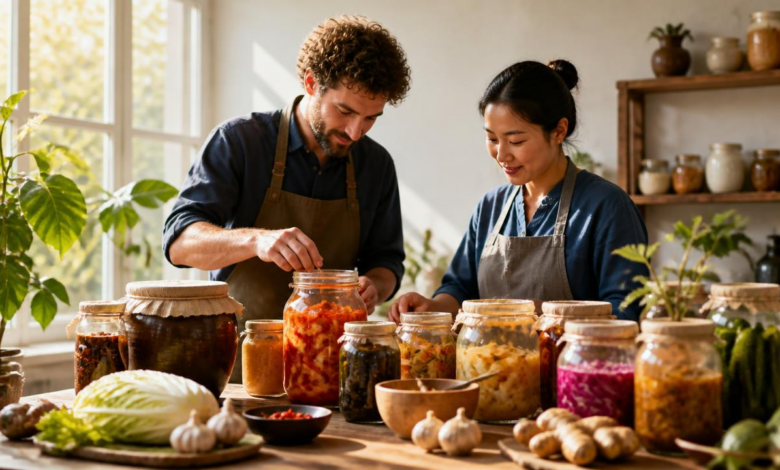
Fermentation, an ancient kitchen technology, continues to feel remarkably relevant today. Across the globe, communities have transformed common ingredients like milk, grains, vegetables, and tea into fermented foods and drinks. This process enhances flavor, extends shelf life, and often supports gut health, evolving from a practical need into a vital part of cultural and culinary identity.
What Is Fermentation, Really?
Fermentation is a controlled microbial transformation where bacteria, yeasts, or molds convert sugars and other compounds. This natural process can preserve food, develop complex flavors, and sometimes improve digestibility, as further detailed by Encyclopaedia Britannica. It is the secret behind kimchi’s vibrant taste, kombucha’s sparkling sharpness, and sourdough’s distinctive tang.
This transformation results in a greater depth of flavor, longer shelf life, and entirely new textures. Not every fermented product contains live microbes when consumed, but the initial process remains crucial. Bread, beer, vinegar, cheese, and soy sauce all rely on fermentation.
Long before modern refrigeration, fermentation was essential for reducing waste and stabilizing harvests. It made perishable ingredients more durable and, in many cases, nutritionally beneficial. This practical foundation, often supported by archaeological and food history research like that found in PNAS, explains why fermented foods are staples in countless food cultures worldwide.
For travelers, understanding fermentation offers a deeper cultural insight. Witnessing a local bread starter being fed or learning family kimchi recipes reveals generations of food knowledge. This hands-on appreciation connects you intimately with a region’s culinary heritage.
The Importance of Fermented Foods for Gut Health
The recent surge in interest surrounding probiotics has spotlighted fermented foods once again. However, their significance extends beyond a mere wellness trend. Researchers actively study how these foods may support the gut microbiome, a complex ecosystem of microorganisms crucial for digestion, immunity, and metabolic function.
A scientific overview from the U.S. National Institutes of Health highlights how fermented foods can increase microbiome diversity in certain diets. The benefits often include improved digestibility and enhanced nutrient availability. For instance, dairy ferments like yogurt and kefir are frequently easier to tolerate than unfermented milk for some individuals.
Yet, a balanced perspective is important. Not all fermented foods are inherently healthy, nor do all products marketed for gut health offer significant probiotic value. Some may be high in sodium, sugar, or alcohol, while others are pasteurized, which can eliminate live cultures. Always read labels and understand the food itself, rather than following hype.
When trying new foods abroad, especially from markets or street vendors, prioritizing safety is crucial. While fermentation is ancient, maintaining good hygiene remains essential for safe consumption. Informed choices ensure a delicious and worry-free culinary journey.
Asia: A Hub of Global Fermentation Traditions
Asia presents some of the most iconic examples of global fermentation. Its traditions are deeply shaped by monsoon climates, extensive rice and soybean agriculture, and highly refined preservation techniques. Here, fermented foods are not mere accompaniments; they are integral to daily meals, seasoning systems, and regional identity.
Kimchi: Korea’s Lively, Layered Staple
Kimchi is recognized worldwide, yet its varieties are far broader than many initially imagine. While napa cabbage kimchi is the most famous, countless regional and seasonal styles incorporate radish, mustard greens, cucumber, and other vegetables. The careful process of salting, seasoning, and controlled fermentation creates a food that is spicy, sour, savory, and central to Korean home cooking.
Kimchi also embodies stories of seasonality and community labor. Traditional kimjang, the communal preparation of kimchi for colder months, illustrates how fermentation fosters both preservation and social connection. It reflects how deeply food traditions can anchor regional identity and collective effort.
Miso, Soy Sauce, Natto: The Power of Soy
Few ingredients demonstrate the versatility of cultured foods better than soybeans. Across Japan and East Asia, fermentation transforms soy into essential products like miso, soy sauce, and natto. Each offers distinct textures and culinary applications. Miso varies from sweet to earthy, salty, or mellow, depending on its ingredients and aging period.
Soy sauce achieves its rich umami depth through lengthy fermentation, becoming a foundational seasoning. Natto, known for its sticky texture and bold flavor, is another unique fermented soy product. These foods powerfully show that fermentation is not just about preservation, but also about building complex flavor profiles.
A spoonful of miso can define a soup, marinade, or glaze, while soy sauce sharpens sweetness and deepens broths. For plant-forward travelers, many of these soy-based ferments seamlessly fit into discussions about meat-free eating and traditional local diets, highlighting their versatility.
Tempeh and Kombucha: Bridging Tradition and Global Appeal
Tempeh, originally from Indonesia, is a firm, sliceable cake created by binding soybeans with beneficial mold. It offers a nutty, savory, and protein-rich profile, growing increasingly popular on menus worldwide. Yet, its local roots and traditional knowledge are paramount.
Kombucha, originating from older traditions in Northeast Asia, has journeyed into cafes, supermarkets, and home kitchens globally. Its widespread appeal comes from its contrasting qualities: tart yet lightly sweet, fizzy yet tea-based. It represents an ancient method with a modern image, making it one of the most visible fermented drinks to cross cultural boundaries.
Europe: Everyday Fermented Comforts and Classics
European fermentation traditions often feel familiar, even to those who may not consciously think of them in microbial terms. Cheese, yogurt, kefir, sourdough, beer, wine, and pickled vegetables are integral to daily life across the continent. Methods range from rustic farmhouse practices to highly controlled artisanal aging, all adhering to the principle that microbes create distinct flavor, texture, and preservation.
Sauerkraut and Sourdough: Tangy Staples
Sauerkraut exemplifies lactic fermentation’s elegant simplicity. Cabbage, salt, time, and the right conditions yield a tangy, long-lasting food ideal for cold-climate preservation. Similar cabbage ferments are found across Central and Eastern Europe, revealing how culinary traditions often transcend political borders.
Sourdough provides another timeless lesson. Flour and water cultivate a living starter, which then becomes bread characterized by its unique tang, resilience, and distinctive flavor. In many regions, a bakery’s sourdough loaf communicates as much about local grain, humidity, and craft as any museum display reveals about history.
Dairy and Beverages: Cheese, Yogurt, Kefir, Beer, and Wine
Dairy fermentation in Europe spans a wide spectrum, from fresh, creamy yogurt to complex blue-veined cheeses and cultured butter. Kefir, with its historical ties to the Caucasus, adds a drinkable dimension, offering a tart and lightly effervescent profile. These foods illustrate how fermentation crafts both luxurious products and essential daily nutrition.
Beer and wine are significant not just as beverages, but as major cultural systems built on fermentation. They interweave agriculture, ritual, trade, hospitality, and tourism. These traditions offer a rich narrative, expanding the story of fermented drinks far beyond the dining table.
Africa: Fermentation for Resilience, Identity, and Sustenance
African food traditions powerfully demonstrate how fermentation supports nourishment in practical and deeply localized ways. Across the continent, cereals, milk, cassava, and various grains are transformed. This process improves shelf life, enhances texture, develops taste, and increases accessibility. Often, these are not specialty items but fundamental components of daily diets.
Injera, Ogi, Togwa, and Fermented Milk
Injera, the distinctive sour flatbread central to Ethiopian and Eritrean cuisines, relies on fermentation for its signature tang and spongy consistency. Traditionally made from teff, it also serves as an edible utensil, fostering a communal and tactile eating experience. Here, fermentation is intrinsically linked to the social rhythm of the meal.
In West Africa, ogi or akamu transforms grains such as maize, sorghum, or millet into a fermented porridge widely used in households. In parts of East Africa, togwa provides a fermented grain-based drink with significant nutritional and cultural relevance. Pastoral communities also maintain rich traditions of fermented milk, showcasing how local ecology directly shapes cultured foods.
For travelers, these foods are often best appreciated within their cultural context, guided by local cooks, market vendors, or family hosts. Regional specialties gain much deeper meaning when one understands the climate and household practices behind them, encouraging slow observation over mere checklist tasting.
The Americas: Ancient Drinks and Modern Craft Revival
The Americas boast some of the world’s most captivating fermented drinks, many intricately tied to Indigenous knowledge systems and local crops. Corn, pineapple, agave, and dairy are all transformed through fermentation in ways that reflect profound geographical connections and precolonial history, alongside modern innovation.
Chicha, Tepache, and Pulque: Traditional Beverages
Chicha, in its numerous regional varieties, links fermentation to maize culture throughout the Andes. Tepache gives pineapple peels a new purpose in Mexico, turning scraps into a refreshing beverage with subtle complexity. Pulque, crafted from agave sap, holds immense historical importance in central Mexico, offering a distinct texture and flavor profile compared to distilled agave spirits.
These beverages demonstrate how fermentation preserves not only ingredients but also invaluable traditional knowledge. These methods endure in homes, markets, and local celebrations, even as mass-produced drinks dominate global attention. Engaging with these traditions reveals the enduring spirit of local culinary heritage.
The Craft Fermentation Revival
Especially across North America, fermentation has seen a mainstream resurgence through small-batch pickles, natural wines, artisanal hot sauces, craft kefirs, and innovative kombuchas. This revival expertly blends ancient techniques with contemporary branding, local sourcing, and sustainability-focused production methods. It also mirrors a growing public interest in gut health, reducing food waste, and ingredient transparency.
Significantly, the most successful modern fermenters often look to the past as much as the future. They draw inspiration from immigrant traditions, work to preserve regional crops, and aim to reconnect consumers with the food-making process. The most compelling ferment is rarely the trendiest; it is often the one rich with a compelling story.
Fermentation’s Role in Culture and Travel
Fermentation extends beyond microbes and nutrition; it is profoundly about belonging. A cherished family pickle recipe, a neighborhood bakery’s sourdough starter, or a ceremonial drink at gatherings can embody memory as clearly as language or music. Traditional fermented foods often persist because they hold emotional, not just practical, significance.
For travelers, this presents a unique opportunity. Tasting cultured foods can become a respectful way to engage with local heritage, rather than simply trying something novel. Inquiring about a ferment’s origin, its makers, and when it is typically consumed often leads to richer conversations than merely asking what is “famous.”
Ethical curiosity is paramount. Fermented foods should not be reduced to fleeting trend labels or wellness slogans, detached from their communities. Respecting their origins, preparation methods, and cultural context enriches the experience, fostering better, more mindful travel habits.
Smart Curiosity and Fermentation Safety
If this article inspires you to explore home fermentation, begin with simpler options like sauerkraut, yogurt, or a reliable sourdough starter. These are generally more approachable than complex mixed ferments. Essential elements include clean equipment, trustworthy recipes, and patience. Fermentation is a natural process, but it requires careful attention.
When tasting fermented foods abroad, seek vendors with consistent turnover, proper storage practices, and evident attention to hygiene. Ask questions whenever possible. A bustling market stall can be an excellent place to discover new ferments, but common-sense observation remains crucial. Curiosity and caution are effective partners.
Remember that fermentation is not a universal solution for dietary concerns. If you have allergies, sensitivities, or specific dietary restrictions, the ingredients and preparation methods are as important as the “fermented” label itself. Informed planning helps travelers with food concerns enjoy international dining safely.
The Future Horizon of Global Fermentation
The trajectory of global fermentation appears expansive. Food scientists are actively researching novel microbial strains, while chefs are redefining flavor through controlled aging and culturing techniques. Organizations like the FAO and WHO recognize the role of traditional food systems in global nutrition and health, highlighting this ancient process as one of the most exciting tools for the future of food.
Yet, fermentation’s true strength may lie in its harmonious balance between innovation and continuity. It possesses the capability to power a laboratory-designed food system, yet it can also thrive within a ceramic jar in a home kitchen. It can scale globally without losing its intrinsic local soul, provided the knowledge behind it continues to be honored.
For travelers, eaters, and curious home cooks, this makes fermentation endlessly rewarding. Every jar, loaf, cup, and crock contains a vibrant conversation between people and microbes, past and present, necessity and pleasure. The fermentation frontier is not solely about what we preserve; it is fundamentally about what enduring traditions and knowledge we carry forward.