
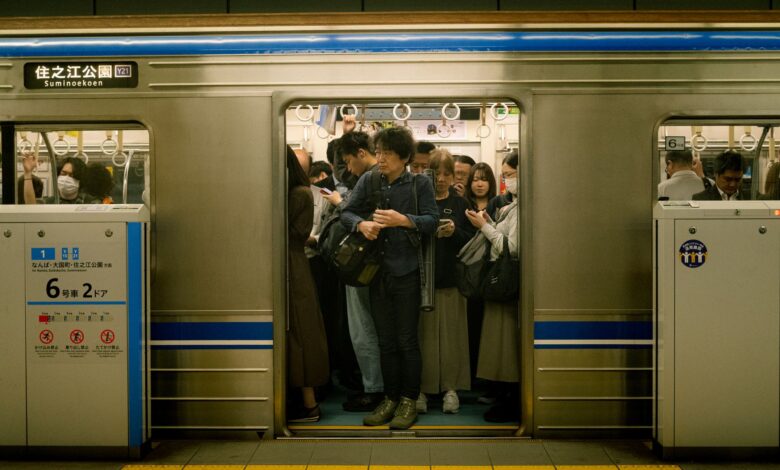
Only a handful of Japanese etiquette rules will actually cause a problem if you break them, and every one of them involves something other people are sharing. A clean floor, a quiet commuter train, bath water a dozen strangers are sitting in: break one of those and the cost lands on everyone around you. Japan’s tourism board traces most of it back to a single idea, which is being aware of how your actions affect the people nearby.
The rest is softer than the internet makes it sound. Plenty of the rules you have read about are regional habits, formal-occasion manners, or things locals break on an ordinary Tuesday, and nobody is keeping score on a visitor who is obviously trying. The catch is that almost nobody will tell you when you get one wrong.
Why Some Japanese Etiquette Rules Matter (and Most Don’t)
Here is the test that does the sorting, and it takes about two seconds to run: does breaking this spoil something other people are using? Tokyo’s official visitor guidance gives the clearest version of it in one line about bathing, which tells you to shower before getting in because everyone has to use the same water. That reasoning is not about respect in the abstract. It is about the next person in.
Run the test on the rest of the list and it collapses fast. Shoes on a floor people sit and sleep on, a phone call in a carriage where forty commuters are trying to switch off, soap in a communal bath: all of those degrade something shared, so all of them carry weight. A slightly wrong bow affects the person in front of you and nobody else, and that person has already worked out you are a visitor.
None of this is law. It varies from one building and one region to the next, and the guidance here was checked against Japanese official tourism sources on 20 September 2026; where somewhere posts its own rules at the door, those are the ones that count.
The awkward part is what happens when you do get a consequential one wrong, which is usually nothing you can see. A stranger who has noticed is far more likely to absorb the problem quietly than mention it, so you should not expect to be corrected mid-mistake and adjust on day two. That is the real argument for learning the short list before you land. Not because any single error is catastrophic, but because you will not get the feedback that would let you fix it.
Ask people who live there and roughly the same shape comes back. In a thread on r/JapanTravelTips from February 2026, a commenter who described themselves as a long-term Japan resident told first-time visitors to ignore the specific rules, saying Japanese people are generally very tolerant and “do not expect visitors to master the intricacies of etiquette” — then listed four things that did matter to them.
Be quiet. Don’t get in the way. Manage your bags. Be ready to carry your own rubbish. Every item on that list is about shared space, arrived at without any framework at all.
So the useful question is not what the rules are. It is which of the things you have read actually belong on a short list.
Japanese Etiquette Rules, Ranked by Actual Consequence
The table below runs from most to least consequential, and the third column is doing the ranking. The first block is where a mistake disrupts other people. The middle block will be noticed and forgiven. The last block produces nothing at all, whatever you have read.
| Norm | Where it comes up | What actually happens if you get it wrong | What to look for |
|---|---|---|---|
| Defacing a shrine, temple or monument | Cultural sites | A criminal offence, not an etiquette question | Any historic structure |
| Shoes off past the entrance | Ryokan, homes, temple interiors, tatami rooms, some restaurants and fitting rooms | You dirty a floor people sit on; it gets cleaned by someone | A step up, a shoe rack, a row of other people’s shoes |
| Washing fully before entering the bath | Onsen, sento, hotel big baths | You contaminate water everyone else is soaking in | Stools, taps and basins before the bath |
| Towel, hair or swimwear in bath water | Same | Same shared water, same problem | Small towel folded on the rim or on heads |
| Phone calls and loud talk on trains | Commuter lines, buses | A carriage full of people stops being usable | Everyone else is silent |
| Blocking the walkway or the train door | Stations, busy streets | You jam a system built for commuters | People flowing past you on one side |
| Tipping | Restaurants, taxis, hotels | Confusion, and the money handed back | No tip line on the bill |
| Chopsticks upright in rice, or passing food chopstick to chopstick | Any meal | Funeral imagery at a dinner table; the one dining error that lands hard | Rice bowls, shared dishes |
| Paying by hand instead of the tray | Shops, restaurants | Mild friction, occasionally a refusal | A small dish beside the register |
| Bowing imperfectly | Everywhere | Nothing. A nod covers it | Not worth watching for |
| Standing on the wrong side of the escalator | Stations | You get walked around | Tokyo stands left, Osaka stands right |
| Eating while walking | Streets, festivals | Nothing, unless you block the pavement | Local signs asking you not to |
| Wearing shorts to a shrine | Temples, shrines | Nothing | No strict dress code exists |
The ranking is not only editorial. Japan’s own tourism ministry has published a set of visitor pictograms under guidelines it calls Travel Etiquette for the Future, and what it chose to make a sign about is instructive: don’t block the walkway, don’t cut in line, don’t trespass on private property, don’t leave rubbish, don’t eat while walking where you are asked not to.
That is a government picking the behaviours worth a pictogram, and almost all of them concern crowds, property and mess rather than manners in conversation. Its guidance is blunter still on cultural sites, where graffiti is described as a criminal offence rather than a courtesy.
What the table cannot show is how each of the top rows actually announces itself on the ground, which is what the next section is for.
Norms That Can Actually Disrupt: Shoe Removal, Train Quiet, Tipping, and Shared Baths
Four situations account for nearly all of the real risk, and each one gives you a visible signal before you can get it wrong.
Shoes come off at a boundary, not at a door. The reliable tell is a change of level: as National Geographic Traveller’s January 2026 etiquette guide puts it, if you are unsure, a step up onto polished wood or a tatami mat is the giveaway. A shoe rack or a row of shoes at the entrance does the same job. Slippers are usually provided, and socks are fine if you would rather not wear them.
The places that catch people out are the ones that don’t look residential: temple interiors, some restaurants, and, going by that same February 2026 thread, a lot of clothing-shop fitting rooms. If you are about to step up onto a floor that looks like it gets sat on, look down before you commit.
On trains, the line is between talking and broadcasting. Tokyo’s transport guidance asks you to avoid phone calls on public transport and to switch devices off near the priority seats, and the customs and manners page published by Japan’s national tourism organisation says the same thing nationally: keep the phone on silent and don’t speak on it. Quiet conversation with the person beside you is ordinary and nobody minds. What breaks the carriage is a voice pitched to carry, because a commuter train is a shared room that happens to be moving.
The same logic covers where you stand and where your bag sits. Tokyo’s guidance points out that platforms mark each carriage door so people queue in the right place, and that the shoving during rush hour is not aggression, just volume.
Tipping is the one where doing nothing is correct. National Geographic Traveller describes tipping in Japan as practically non-existent and notes it can cause offence in some situations, and the mechanism is simple: the service is already inside the price, so adding cash reclassifies a transaction that was already complete. Hand money over on the small tray by the register rather than into a hand, and you have covered the whole of it. There is one narrow exception you will see argued about online, which is the envelope handed to an attendant at a high-end traditional inn. It is discretionary, it is not expected of visitors, and skipping it is entirely normal.
Baths are the strictest thing on the list, because the water is the equipment. Beppu City’s official onsen guide calls washing your whole body before you get in the golden rule and says plainly that the bath is for soaking, not for cleaning. The same guidance says the small towel must never go into the bath water, that long hair has to be tied up so it doesn’t touch the water, and that swimsuits are not allowed. Tokyo’s guidance gives the reason in six words: everyone has to use the same water.
Get those right and you have the whole of it. The full step-by-step sequence, from the changing room to what to do with the towel afterwards, is covered in our dedicated onsen etiquette guide.
One caveat on baths that gets flattened online. Tattoo policies vary by facility rather than following a national rule. Tokyo’s guidance says some facilities refuse entry to people with tattoos, while Beppu’s own city tourism site describes Beppu as one of the most tattoo-friendly places in Japan and points visitors toward private rentable baths as a fallback. Check the individual facility, not the country.
Gestures That Will Be Noticed (but Won’t Ruin Your Trip)
This middle group is worth knowing because getting it right feels good, and worth relaxing about because getting it wrong costs nothing.
Two chopstick positions are the exception, and they are genuinely worth memorising. National Geographic Traveller counts exactly two really offensive things you can do while eating in Japan: passing food directly from your chopsticks to someone else’s, and leaving chopsticks stuck upright in a bowl of rice. Both are funeral imagery. A commenter in that February 2026 thread spelled out why, describing how rice is offered to the dead with chopsticks standing upright in it, and how a family passes the deceased’s bones from one person’s chopsticks to another’s after a cremation. That is the whole mechanism: you are staging a funeral rite at a dinner table without meaning to.
Put shared food straight onto the other person’s plate and rest your chopsticks flat, and the problem disappears. The other chopstick rules you may have read exist, but they sit closer to which fork goes where in a Western place setting.
Bowing is the most over-taught gesture in the whole subject. Japan’s national tourism organisation says visitors are more likely to be bowed at than expected to bow, and frames a bow as a nice extra gesture alongside a spoken thank-you rather than something to get right. Commenters in the February 2026 thread were blunter, with one saying nobody expects a visitor to bow at all and another suggesting a head-nod, like tipping a hat. A small nod with your thanks is the whole skill.
Drinking has two layers, and only one of them is aimed at you. In a group, it is good manners to wait until everyone has a drink and say kanpai together before the first sip; a Tokyo Japanese-language school’s explainer on kanpai notes that drinking before the toast can read as rude in both casual and formal settings. Everything else you have read about Japanese drinking etiquette gets described in that same explainer as etiquette for company parties and for showing respect to seniors and coaches: pouring for the people beside you, holding your glass lower than your boss’s, never filling your own.
Those rules are about rank inside a group. At a table of two visitors in an izakaya, there is no rank for them to act on.
Money has one small visible convention. Shops and restaurants put a small tray beside the register, and the cash goes in the tray rather than into a hand. It is the sort of thing you would work out by watching, except that one commenter in that thread described a cashier who would not take the money any other way until they used the tray, so it occasionally does have teeth.
The “Rules” No One Actually Enforces for Tourists
This is the group that generates the most anxiety and the least consequence, and it is worth naming precisely because the lists of what not to do in Japan print these in the same font as the shoe rule.
Eating while walking is the biggest of them. Japan has a word for it, tabearuki, and it is not prohibited by law anywhere in the country. Two places have tried to discourage it formally. Kamakura passed an ordinance in 2019 asking visitors not to eat on the move in its busy streets, and Kyoto put up signs asking the same. According to that explainer, officials in both cities said the aim was to raise awareness rather than to punish anyone, and the stated worry was litter and spills that residents end up clearing.
So the honest version is a local request about mess in specific crowded places, and at festivals, food markets and theme parks it is completely normal. One commenter on r/JapanTravelTips in July 2024 called it the most over-hyped thing they had encountered, said they had watched locals do it, and reported that nobody batted an eye when they did it themselves.
Dress codes for temples and shrines are mostly imported anxiety. Japan-guide’s page on temple and shrine visits states there is no strict dress code, only a recommendation to be appropriately dressed at a place of worship. Shorts in summer are not the problem people expect.
The things that genuinely apply at a shrine are procedural rather than sartorial. Keep to the sides of the approach path rather than the middle, and if you are going to pray, the sequence is two bows, two claps, a moment, and one more bow. That same page notes that plenty of visitors skip the water-purification ritual entirely, and temples get a bow instead, without the clapping.
Escalators are not a national rule at all. Tokyo stands on the left; Osaka stands on the right, which one commenter in the February 2026 thread pointed out directly in response to someone confidently recommending the left everywhere. There is nothing to memorise here, because the only reliable instruction is to copy the queue in front of you.
And perfect bowing form, which the previous section already dealt with, belongs here too. So does most of what you have read about formal drinking. The pattern is consistent enough to be useful on its own: when a rule is about the space, it is real, and when it is about your technique, it is decoration.
The Fallback Rule That Works for Every Situation
Every guide to Japanese customs and etiquette ends somewhere, and you will hit a situation none of them covered: a restaurant with a system you don’t recognise, a doorway you can’t tell is private, a queue that isn’t obviously a queue. The rule that covers all of them is the one the official sources keep arriving at independently.
Pause and watch what the people around you are doing, then copy it. Japan’s national tourism organisation says exactly that in two places, advising visitors to observe what others are doing or ask for guidance when in doubt, and adding, plainly, that if in doubt you should just follow the locals. Its manners guide makes the expectation explicit: you are not expected to become a master. Beppu’s onsen guidance ends on the same note, telling first-timers the manners are not a test you can fail, and that being quiet, clean and considerate is the whole of it.
Asking works better than people expect, too, and it is the move most visitors skip out of embarrassment. The national tourism organisation’s advice is to ask whenever you are unsure of a particular custom, on the grounds that locals will be glad to explain. A question costs you four seconds of awkwardness and removes the guesswork entirely, which is a better trade than standing in a doorway trying to infer a rule from the flooring.
This is also why the short list at the top of this article is short. You do not need a complete model of Japanese social behaviour to travel well. You need the few norms that protect something shared, plus the reflex to look around before you act, and the second one will carry you through everything the first one missed.
Where Most Travellers Get It Wrong
The mistake is not breaking a rule, it is spreading your attention evenly across forty of them and arriving exhausted by a subject that only has about six consequential items in it. Learn the ones that protect a shared floor, a shared carriage and shared water, and treat everything else as optional polish. If you want one thing to read before you go, read the Japan Tourism Agency’s own travel etiquette guidance, because it names the behaviours the country itself is asking visitors to change. Get those few right and nothing else on the list will be held against you.
Frequently asked questions
Is it rude to leave food on your plate in Japan?
Leaving food is generally frowned on, and Japan’s national tourism organisation notes that asking to take leftovers home is usually not accepted either. The practical fix is ordering in smaller rounds rather than committing to everything at once.
Do I have to take my shoes off in restaurants?
Only in some. Western-style restaurants keep shoes on; traditional places with tatami floors do not. The signal is the same everywhere: a step up, a shoe rack, or other people’s shoes already sitting at the entrance, which appears in shops and fitting rooms too.
Am I supposed to slurp noodles?
Japan’s national tourism organisation says local custom favours slurping rather than chewing with noodle dishes, and some people will tell you it improves the flavour. It is not a requirement, and eating quietly attracts no reaction either way.
Can I use an onsen if I have tattoos?
It depends entirely on the facility rather than on any national rule. Tokyo’s official guidance notes some baths refuse entry to people with tattoos, while Beppu’s city tourism site describes the city as unusually tattoo-friendly. Booking a private rentable bath removes the question completely.
