
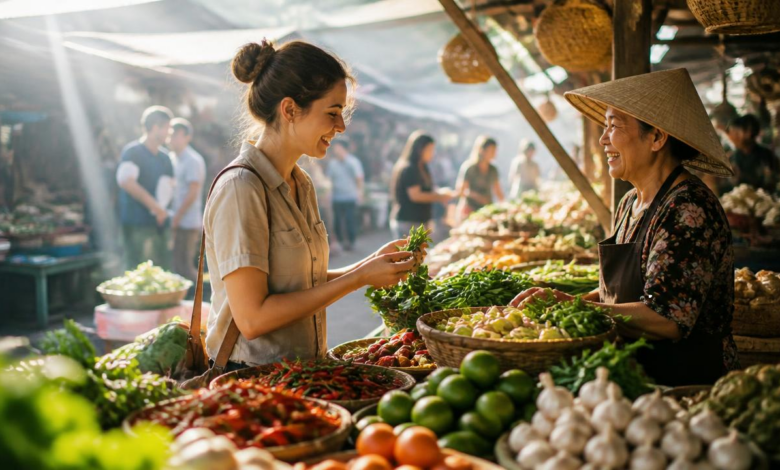
Global food markets are where a destination truly reveals its essence. Before exploring monuments or museums, one can often understand a city through the steam of a simmering pot, the sharp scent of fresh herbs, and the lively calls of vendors. For travelers seeking more than just a checklist, these markets offer an authentic path to understanding a place.
This guide explores why international food markets are vital for meaningful travel experiences. They are not merely places to eat, but living records of migration, memory, climate, trade, and daily life. Within these bustling aisles and makeshift stalls, authentic flavors in global food markets transform from a simple phrase into a rich experience to savor.
If you enjoy planning trips around local cuisine, markets also provide a smart foundation for culinary tourism. They help you compare different regions, observe seasonal availability, and connect dishes to the people who create them.
Why Global Food Markets Matter
A market offers a true glimpse into what a community eats, beyond what is prepared for visitors. While restaurants offer beautiful interpretations of cuisine, markets unveil its raw ingredients. Here you find staple grains, everyday sauces, hand-tied herbs, and fruits available only for a few weeks. This is why local food markets worldwide are invaluable classrooms for travelers.
They also provide a more democratic food experience. In many destinations, a market breakfast or lunch is significantly more affordable than a formal meal. Yet, it still delivers exceptional quality and profound cultural depth. For budget-conscious travelers, market food adventures are an excellent way to extend your spending without compromising authenticity.
Markets are vibrant social hubs. Grandparents shop alongside chefs. Office workers queue next to students. Fishermen, farmers, spice merchants, bakers, and tea sellers all contribute to a conversation that has likely continued for generations. For a deeper understanding of respectful local engagement, our article on Ethical Tourism: How to Travel Responsibly and Support Local Communities offers valuable context.
Authenticity in Markets
Authenticity is not solely defined by age. A market can be historic yet cater predominantly to tourists, while a newer one might feel deeply rooted in local customs. In practice, authenticity often emerges through specific patterns. Look for repeat local customers, seasonal produce, regional ingredients, and specialized stalls.
Observe dishes prepared with confidence rather than spectacle. Seek out food that fulfills a genuine local need. Are breakfast options designed for workers? Do you see unfamiliar ingredients used frequently? Are vendors discussing ripeness, weather, or origin? These small details reveal a market’s true pulse far more clearly than any signboard.
Navigating International Food Markets with Confidence
Many travelers wonder: how to find authentic food in global markets without feeling overwhelmed? The approach is usually straightforward. Begin slowly, observe where locals are eating, and accept that your initial stroll through a market is for orientation, not immediate purchases.
Walk through the entire market once before buying anything substantial. Notice where the longest local lines form and which stalls have rapid turnover. Observe foods that appear freshly assembled rather than prepared too far in advance. This simple habit enhances both the quality of your choices and your confidence.
Bring small denominations of local currency if possible, although digital payments are becoming more common in major cities. Learn a few polite phrases, especially greetings and thank yous. For gratuity customs, which vary widely in markets, refer to our guide on [Tipping Around the World: A Global Guide to Local Gratuity Etiquette].
Practical Tips for Safe Tasting
Food safety is important, especially when tempted by numerous street eats in one afternoon. Choose busy stalls with visible customer turnover. Observe whether hot foods are served at appropriate temperatures. If you are uncertain, opt for peeled fruit or items cooked fresh to order.
Always wash or sanitize your hands before eating. Carry tissues or wipes, and avoid ordering too much early in the day. A measured pace allows you to enjoy more and minimizes waste.
For a deeper dive into hygiene, stall selection, and smart caution, our guide on Global Street Food Safety: Your Guide to Delicious and Worry-Free Eating Abroad is particularly useful. Travelers with dietary restrictions should also review [Navigating Food Allergies Abroad: A Guide to Safe and Delicious International Dining] before exploring unfamiliar ingredients.
Market Etiquette for Better Visits
Market etiquette is less about strict rules and more about reading the atmosphere. In some places, touching produce before buying is normal. In others, it is the vendor’s role. Bargaining might be expected for dry goods or crafts, but usually not for prepared food.
Photography requires extra consideration. Always ask for permission before taking close-up pictures of vendors or their workspaces. A smile, a gesture towards your camera, and a brief request go a long way, especially when language barriers exist.
Be patient during peak hours. Markets serve daily local life before they serve tourism. When you approach this reality with respect, interactions become warmer, and recommendations often improve.
Maestro Spotlight: The Faces Behind the Flavors
The term “market maestro” applies to individuals who understand their ingredients so intimately they can offer guidance in a single sentence. They may not call themselves experts, yet their craft shapes a city’s culinary identity.
These vendors, cooks, and traders often act as a bridge between culinary history and modern tastes. They know what has evolved, what should remain unchanged, and what shortcuts might diminish a dish. Their knowledge is practical, inherited, and refined through years of repetition.
The Spice Merchant in Marrakech
In Marrakech, a spice seller in the old souk might start by discussing cumin, not because it is exotic, but because it is fundamental. He might explain how one blend is for tagine, another for grilled lamb, and yet another for lentils. To him, spices are not mere souvenirs; they are an essential part of the culinary structure.
What often stands out is their restraint. The best merchants do not claim every blend is mysterious or rare. Instead, they explain freshness, proper storage, and context. Why toast spices lightly? Why grind in small batches? Why do some families prefer more coriander while others favor cinnamon? Their authority stems from daily use, not theatrics.
A thoughtful spice merchant also teaches travelers to buy less, but better. One fragrant bag of ras el hanout, still vibrant weeks later, is more valuable than a suitcase full of fading powders. This illustrates how a guide to regional flavors in markets can become a literal mapping of a city’s palate through a single ingredient.
The Noodle Cook in Bangkok
In Bangkok, a noodle vendor working over intense heat might prepare countless bowls with astonishing calm. Her movements appear repetitive until you notice the subtle decisions: broth strength, noodle cooking time, herb balance, and sweetness adjusted by practiced habit.
Her stall’s excellence often lies in its consistency. She understands which stock should taste bright in the morning and which dishes develop more depth by evening. Regular customers trust her because each bowl reflects culinary memory, not improvisation for social media.
When travelers seek the best places for street food around the world, they often imagine novelty. Yet, masters like this remind us that consistent daily excellence is the deeper thrill. Authenticity frequently tastes like something made the same careful way hundreds of times over.
The Cheesemonger in Southern Europe
In a southern European market, a cheesemonger might offer a sliver of cheese before any purchase. This is more than generosity; it is an education. He wants you to notice the pasture, the aging process, the salt level, and the type of milk used. He might inquire if you want something for bread, wine, or cooking.
This type of vendor helps travelers move beyond generic labels. “Sheep’s cheese” becomes a reflection of a landscape. “Fresh produce” signifies a specific season. “Artisan products” represent individuals whose names are known in the market long before visitors arrive.
Market Tours: Iconic Global Destinations
Explore some of the world’s most renowned food markets, each offering unique insights into local culinary traditions and daily life. These destinations provide vivid experiences for any food-focused traveler.
La Boqueria, Barcelona
La Boqueria is one of the world’s most recognized food markets. Its fame sometimes makes travelers hesitate, wondering if it’s still worth visiting. Yes, it is, provided you arrive with realistic expectations and a clear strategy. Its popularity brings crowds, but also concentrated abundance, visual drama, and access to ingredients that define Catalonia’s broader food identity.
Arrive early if you can. The market is most enjoyable before midday, when aisles are easier to navigate and stallholders have more time for conversation. You are first greeted by a riot of color: chilies stacked like vibrant lacquer, citrus in bright pyramids, and mushrooms arranged with museum-like precision.
Then comes the soundscape: metal utensils clinking, coffee machines hissing, and vendors negotiating with local buyers at a pace that confirms this is still a working market, not just a tourist attraction.
What to Eat at La Boqueria
Start with fresh produce, even if your initial goal was snacks. The fruit quality here, especially in season, can redefine your expectations. Then explore cured meats, olives, conservas, and small seafood counters, where the longest lines often signify the best recommendations.
The quality of prepared foods can vary, so choose busy places with high turnover. A cone of fried seafood, a plate of grilled mushrooms, or a simple tapa made with excellent ingredients often surpasses anything overly elaborate. The market truly rewards restraint and discerning choices.
For travelers building a broader Iberian food itinerary, La Boqueria pairs well with exploring local drinks. Our guide to [From Vineyards to Sake Breweries: A Global Guide to Authentic Beverage Experiences] can help extend your curiosity beyond the plate.
How to Experience it Well
Treat La Boqueria primarily as a market for ingredients, and secondarily as a place to eat. If you rush directly to the most photographed counter, you might miss its more revealing corners. Spend time in sections selling raw ingredients rather than only finished dishes.
Notice what locals buy in large quantities. Ask which mushrooms are best for sautéing, which tomatoes are sweetest that week, or which ham offers good value. These types of questions foster better conversations than merely asking for “the famous thing.”
A smart visit includes an exit plan. La Boqueria can be an ideal morning stop, followed by lunch in a nearby neighborhood. This rhythm helps prevent market fatigue and allows for comparisons with other local eateries.
Tsukiji Outer Market, Tokyo
Tokyo’s Tsukiji Outer Market remains a compelling example of how traditional food markets evolve while retaining their identity. While wholesale systems have shifted, the surrounding ecosystem of knife shops, dried goods, seafood specialists, tea, pickles, omelets, and quick bites still offers a profound lesson in Japanese food culture.
Here, precision is the overriding sensation. Products are arranged with clarity rather than chaos. Labels are important. Knife shops exemplify craftsmanship. Ingredients for broths hint at the layered flavors built into Japanese cooking through careful technique, not excess.
The market rewards curiosity about the process. Why does one type of kombu command more respect than another? Why are dried fish shavings handled with near-ceremonial seriousness? Why do tamagoyaki stalls draw long queues for something seemingly so simple?
Must-Try Bites and Details to Notice
A warm skewer, a slice of omelet, a rice bowl featuring excellent seafood, or a refreshing tea break can each teach something different. The lesson is not solely about luxury, but about contrast, balance, and meticulous attention to texture.
Also, observe the packaging. In many stalls, the wrapping and presentation reflect a deep respect for the ingredient. This can deepen your understanding of how food culture extends beyond mere flavor, incorporating ritual and the art of gifting.
If markets inspire you to learn through participation, Beyond Restaurants: Immersive Culinary Experiences Through Global Cooking Classes is a natural next step. Markets often teach about ingredients; classes teach you what to do with them.
Behavior in Japanese Markets
Flow is important. Avoid blocking narrow pathways. Keep your voice moderate. Pay attention to signs indicating where eating is permitted, as not every market lane is intended for on-the-go consumption.
Polite questions are welcomed, but efficiency is valued. Observe first, then ask concise questions. This approach almost always leads to smoother, more respectful exchanges with vendors.
Chatuchak and Bangkok’s Expansive Food World
Bangkok’s food market culture extends far beyond a single location, but Chatuchak Market offers a vibrant entry point into its abundance. Though famous for its size and shopping variety, its food zones clearly demonstrate why Thailand is central to conversations about global street food and unique foodie destinations.
The defining characteristic of the experience is momentum. Smoke, ice, the rhythmic sound of mortar and pestle, plastic stools, coconut aromas, grilled meats, fresh herbs, and sizzling batter all coexist. This choreography feels improvised yet is rarely accidental. The city’s confidence in balancing sweet, sour, salty, bitter, and heat becomes evident even before your first bite.
The best strategy combines appetite with a measured pace. You are not seeking one grand meal, but rather building a sequence of tastes. Perhaps grilled pork first, an herbal salad next, dessert later, and coffee after that. Bangkok’s markets reward sampling and exploration over attempting to conquer everything.
Dishes That Explain the City
A bowl of boat noodles speaks to depth and concentrated flavor. Green papaya salad reveals a vibrant interplay of texture, acidity, and regional variations. Mango sticky rice illustrates how dessert can be both comforting and artfully constructed, with ripe fruit, warm rice, and salted coconut creating measured contrast.
Fresh herbs are the unsung heroes. Thai markets constantly remind you that cuisine relies heavily on leaves, roots, and aromatics used at precisely the right moment. This lesson is particularly valuable for travelers wanting to understand why dishes prepared abroad rarely taste the same when casually recreated at home.
Bangkok also appeals to those interested in broader beverage culture, from iced coffee to herbal drinks. Readers curious about drinks as part of market identity might enjoy [The Global Coffee Trail: Exploring Unique Brews and Café Cultures Worldwide], which expands the story beyond food alone.
Deconstructing Authenticity: Iconic Dishes
Understanding individual dishes through their market context reveals layers of history, adaptation, and local genius. Two iconic dishes serve as perfect examples of this culinary evolution.
Anatomy of Authenticity: Tacos al Pastor
Few dishes explain culinary history as clearly as tacos al pastor. At first bite, they appear simple: marinated pork, sliced from a vertical spit, served in a tortilla with onion, cilantro, salsa, and often pineapple. Yet, beneath this simplicity lies a rich narrative of migration, adaptation, and local brilliance.
The vertical roasting method echoes shawarma traditions, introduced to Mexico by Lebanese immigrants. Over time, local ingredients and preferences transformed the concept. Pork often replaced lamb, chilies shaped the marinade, and the taco found its own rhythm within central Mexican street culture.
Authenticity here doesn’t mean being frozen in time. It means being coherent with its place. A good al pastor tastes of smoke, spice, fat, acidity, and dynamic movement. The tortilla matters, the cut of the meat matters, and the ratio of ingredients matters. The pineapple, when used skillfully, sharpens the pork’s flavor rather than making the taco sweet.
What to Look for in a Great Version
Observe the trompo, the vertical spit. Is the meat layered tightly? Does the outside caramelize beautifully while the inside remains moist? Is the taquero slicing with speed and precision? Is the tortilla warmed properly, not treated as an afterthought?
Also, pay close attention to the salsas. They are not optional additions; they complete the dish’s flavor architecture. One might emphasize roasted depth, another fresh heat, and another a vibrant tang.
This illustrates why discovering local cuisine through markets is so significant. A dish like tacos al pastor is not merely eaten; it is witnessed in motion, surrounded by aromas, conversations, and the continuous rhythm of preparation.
Anatomy of Authenticity: Pho at the Edge of Morning
A bowl of phở might seem universally familiar now, but market contexts restore its precision. In Vietnam, especially in morning settings, it often expresses restraint rather than excess. Broth clarity is a sign of discipline, not blandness.
The core of great phở is balance: bones, aromatics, time, and careful skimming. Then come the regional variations in garnish, noodle width, beef cut, and preferred herbs. While broad Northern and Southern styles are often discussed, market stalls highlight the powerful personal and local signatures even within those categories.
Authentic phở also teaches patience. The broth may have simmered for hours, yet service is incredibly swift. This paradox defines many market masterpieces: extensive preparation, quick delivery, and deep flavor conveyed without dramatic fanfare.
Why Markets Explain the Dish Better
A menu can list ingredients. A market, however, reveals supply chains, the freshness of herbs, and the nuances of breakfast culture. You see the basil arrive; you smell the simmering stock. You observe locals seasoning their bowls lightly or heavily, according to their habits.
This is why food travel guide experiences often work best when they focus less on famous names and more on context. The dish becomes clearer and more resonant when you observe the entire ecosystem that supports its creation.
Global Spice Route: Ingredients and Identity
Ingredients become more understandable in markets because they are presented as living parts of a culture, rather than abstract pantry items. Three examples demonstrate how dramatically a single ingredient can shape a culinary identity.
Turmeric is valued across South and Southeast Asia not only for its vibrant color but also for its earthy, bitter, and warming notes. Fresh turmeric, when cut open, appears almost electric. In markets, seeing it alongside ginger, galangal, and chilies helps travelers understand how families of flavor are constructed.
Za’atar, depending on the region and household tradition, can vary significantly in its balance of herbs, the brightness of sumac, and the presence of sesame. When purchased in a market, it comes with inherent use-cases: on flatbread, over labneh, on vegetables, or mixed with olive oil. This is where a spice blend transforms into a daily culinary language.
Szechuan pepper fundamentally alters the eating experience through sensation. Its citrusy fragrance and mouth-tingling effect illustrate that flavor encompasses both taste and physical response. In Chinese markets, it often appears among dried chilies, fermented condiments, and preserved goods, collectively explaining the layered complexity of regional cuisines.
Buying Spices Well While Traveling
Purchase spices from stalls with good turnover and a noticeable aroma. Ask whether the ingredient is mild, strong, fresh, toasted, or blended for a specific dish. Avoid buying very large quantities unless you are certain you will use them quickly.
If customs regulations permit, a few small, thoughtfully chosen packets are better than impulse purchases. Label them immediately upon returning home. They will become edible memories, bringing flavors of your journey back to your kitchen.
Dish Highlights: What to Eat at Global Food Markets
Travelers frequently ask, what to eat at global food markets when time is limited. The answer varies by location, but a useful strategy is to prioritize foods that are freshest, most specific to the local context, or difficult to replicate elsewhere.
Here are excellent market choices across various regions:
- Fresh seasonal fruit, especially where climate and ripeness create a dramatic difference in flavor.
- Regional soups or broths with high vendor turnover.
- Grilled items cooked to order right before your eyes.
- Flatbreads, dumplings, or pastries assembled and cooked in front of you.
- Local cheeses, cured meats, olives, or pickles unique to the region.
- Desserts directly tied to local ingredients, rather than generic sweets.
And here are a few examples of memorable local delicacies often found by market type:
- In Mexico: tacos, tamales, fresh juices, and various masa-based snacks.
- In Japan: tamagoyaki, seafood rice bowls (donburi), pickles, and delicate tea sweets.
- In Thailand: skewers, noodles, papaya salad (som tum), and coconut-based desserts.
- In Morocco: olives, msemen (layered flatbread), tagine components, and diverse spice blends.
- In Italy: regional cheeses, porchetta, seasonal vegetables, and filled pastries.
- In Turkey: simit (sesame bread rings), stuffed mussels, meze ingredients, and tea.
A Simple Tasting Strategy
Do not try to “conquer” the market in just one hour. Instead, choose one savory dish, one ingredient-focused snack, one refreshing drink, and one sweet item. Then, pause to savor and assess your choices.
This slower rhythm creates stronger memories and fewer regrets. It also leaves space for spontaneous recommendations from local vendors, who often guide you towards hidden gems not found in guidebooks.
The Market’s Pulse: Community and Sustainability
A food market often functions as an economic engine disguised as a vibrant feast. It supports growers, fishers, transport workers, cooks, cleaners, repair people, and numerous small family businesses. Every purchase you make contributes to a chain of livelihoods.
This aspect is significant for travelers who wish for their spending to directly benefit the local community. Compared to highly standardized tourism, market purchases often disperse funds across many small operators rather than concentrating them with a single large entity.
Markets also safeguard practical knowledge. People learn which fish are in season, how to judge ripeness, how to prepare lesser-known cuts of meat, and how to adapt recipes when prices fluctuate. This knowledge is a form of cultural wealth, even when it is rarely formalized.
Markets as Cultural Memory
Many traditional food markets endure because they remain functionally useful, not solely because they are protected as symbols. Their continued existence depends on ongoing local participation. When markets lose relevance to local residents, they risk becoming mere stages rather than living ecosystems.
Therefore, travelers should support the substance of a market over its spectacle. Buy ingredients, ask questions, choose family-run stalls when possible, and be open to foods that are ordinary to residents. The ordinary is often where culture resides most honestly.
For readers interested in the ethics of supporting heritage, Preserving Traditions: How Travelers Can Support Indigenous Arts and Crafts Globally offers a parallel perspective. While focused on crafts, its core lesson applies equally to food: respect the people behind the tradition.
Sustainability and the Future of Markets
Not every market is inherently sustainable, but many support shorter supply chains and promote seasonal eating patterns. Shoppers directly observe abundance and scarcity, fostering a more realistic relationship with food sources.
Travelers can reinforce these practices by minimizing waste, carrying reusable items when practical, and making purchases with intention rather than solely for novelty. Our article on [Zero-Waste Wanderlust: How to Eat Sustainably and Minimize Your Food Footprint Abroad] delves deeper into how food choices impact our planet.
Reading a Market Like a Food Traveler
The most effective tips for exploring international food markets often have little to do with lists of “must-eats.” Instead, they revolve around pattern recognition. Once you learn what to observe, almost any market becomes a more rewarding experience.
First, identify the market’s dominant organizational logic. Is it structured by ingredient type, mealtime, region, religion, or wholesale versus retail function? Understanding this structure makes your visit far more intuitive.
Second, observe what professionals are buying. If chefs, restaurant buyers, or experienced local shoppers are congregating around a particular produce stand, pay close attention. Their presence is a practical signal of quality and freshness.
Questions Worth Asking Vendors
Simple, respectful questions can often unlock the most useful answers:
- “What is best today?”
- “Is this local or from another region?”
- “How do people usually eat this?”
- “Is this sweet, spicy, sour, or mild?”
- “What time should I return for the freshest batch?”
These questions invite expertise rather than demanding a performance. They also help you avoid treating a market as just another generic attraction.
Third, compare similar items if possible. Taste two olive varieties, two mangoes, or two broths. Comparison is one of the fastest ways to develop your palate and discernment while traveling.
Best Food Markets to Visit for Flavor and Context
No single list can definitively name the best food markets to visit, as their value depends on what you seek. Some travelers desire legendary scale, others prefer intimacy, region-specific ingredients, or less tourist pressure. Nevertheless, certain types of markets consistently stand out globally.
Barcelona’s La Boqueria excels for its visual abundance and Iberian ingredients. Tokyo’s Tsukiji Outer Market is superb for craftsmanship and ingredient knowledge. Bangkok’s market culture offers unmatched energy and street-food variety.
Elsewhere, Mexico City’s markets reward travelers with a diverse array of corn products, chilies, salsas, and snacks. Istanbul reveals a rich tea culture, breakfast ingredients, sweets, and building blocks for meze. Marrakech teaches about aroma, texture, and the logic of spice commerce. Palermo, Hanoi, and Oaxaca also deserve recognition for their strong connections between market life and everyday identity.
Choosing the Right Market for Your Travel Style
If you enjoy early mornings and ingredient study, opt for wholesale-adjacent or produce-heavy markets. If you prefer social energy and casual grazing, seek out mixed markets with strong cooked-food sections. If your primary goal is learning, choose places where locals still shop in significant numbers.
For broader culinary trip inspiration beyond daily markets, [Unearthing Culinary Secrets: A Deep Dive into Global Food Festivals & Regional Delicacies] can help you link market visits with larger regional traditions.
Market Challenges: Crowds, Tourism, and the Search for the Real
Food travelers often worry that a market’s fame might diminish its authenticity. Sometimes popularity does alter the experience. Crowded markets might feature more souvenir stalls, English menus, inflated pricing, or foods primarily designed for photography. However, tourism does not automatically erase a market’s inherent value.
A better question to ask is whether the market still serves locals in meaningful ways. A place can adapt to visitors while still preserving strong culinary integrity. You might simply need better timing, more careful observation, and lower expectations of exclusive access.
Avoid binary thinking. “Touristy” and “authentic” are not always opposites. Many excellent culinary travel markets contain both elements of performance and genuine local reality, sometimes within neighboring aisles.
Getting Past the Obvious Layer
Visit earlier in the day. Explore the side alleys and less prominent sections. Ask vendors what local people typically buy for lunch or dinner. Consider returning twice: once for the general atmosphere and once for a more focused eating experience.
If possible, pair a famous market with a visit to a smaller, neighborhood one. The comparison is often more educational than either visit alone. One teaches about scale and prestige, while the other reveals the routines of daily life.
For Different Diets and Travel Needs
Global markets can be a source of immense joy for many travelers, but they are not equally simple for everyone. Vegetarians, vegans, individuals with allergies, those avoiding alcohol, and travelers with sensory sensitivities may require extra planning.
The good news is that markets can be ideal spaces for customization. The visibility of ingredients often makes it easier to identify what is in a dish or to assemble a meal from separate components. Think of fresh fruit, bread, cheese, salads, rice, legumes, or cooked vegetables.
Travelers exploring plant-forward eating can further their journey with The Rise of Plant-Based Travel: Navigating Vegan and Vegetarian Cuisines Worldwide. It helps bridge the gap between curiosity and confidence when menus are limited or unclear.
Accessibility, Pace, and Comfort
Some markets can be dense, loud, and physically demanding. Wear comfortable shoes suitable for potentially wet floors and long periods of standing. If mobility, stamina, or sensory overload is a concern, consider visiting during less crowded hours.
Do not hesitate to take breaks. A market is not less enjoyable if you sit down with a cup of tea for fifteen minutes to simply observe. Sometimes, that pause is precisely when the market truly begins to make sense and reveal its rhythm.
Building a Deeper Culinary Journey Around Markets
Markets are often the beginning, not the end, of a culinary trip. After a compelling market visit, travelers typically start asking better questions. Which dishes belong specifically to this region? Which ingredients are seasonal? Which flavors are linked to migration or historical trade routes?
This awakened curiosity can lead in several directions. You might decide to take a cooking class, book a home dining experience, follow a beverage trail, or explore rural producers outside the city. Each layer adds richer context to your initial taste discoveries.
A particularly rewarding progression is market, then cooking class, then a home meal. Seeing ingredients sold, then cooked, then served in a domestic setting creates a complete narrative of a place. Readers drawn to intimate cultural exchange may enjoy Home Dining Experiences Abroad: Savoring Authentic Meals with Local Families, which beautifully complements market discoveries.
Questions That Keep the Journey Going
After visiting a market, ask yourself these reflective questions:
- What ingredient surprised me the most?
- Which dish tasted simplest but seemed hardest to master?
- What did locals eat that most tourists overlooked?
- Which particular smell defined the market for me?
- What would I eagerly return to eat tomorrow morning?
These questions transform mere appetite into lasting memories, and memories into deeper cultural understanding.
Expert Lens: Defining the Best Markets
If someone asks, “Where are the best global food markets?” the honest answer is that the best market is one that clearly reflects daily food culture. While fame can play a role, its fundamental function matters more.
Great markets typically share a few key traits:
- Strong attendance from local residents.
- A clear presence of regional products.
- Noticeable seasonal turnover of goods.
- Skilled vendors with specific expertise in their products.
- Freshly prepared foods tied to local culinary habits.
- A sense of authentic rhythm rather than pure spectacle.
By this definition, some of the most rewarding markets you encounter might be smaller than anticipated. They may not appear on every list, but they often teach more because they are less curated for external approval.
Conclusion: Follow the Crowd, Then Look Beyond It
To explore authentic flavors in global food markets is to journey through appetite into culture itself. Markets condense geography, labor, history, climate, and family traditions into a single, walkable space. They sharpen your senses and often humble your preconceived notions.
They also make travel feel reciprocal. You are not merely consuming a destination; you are learning how people feed themselves, celebrate, preserve memory, and navigate change. This is why international food markets remain among the most rewarding forms of cultural immersion available to travelers.
So, on your next trip, set aside a morning for a market visit. Arrive with curiosity. Observe before you order. Ask simple questions. Taste what seems ordinary to locals. Trust the stall with the longest local line. Then, carry those flavors forward into the remainder of your journey.
If a market reshapes your understanding of a place, let it guide your next steps. Explore more ethnic food experiences, compare regional cuisines, and build your own collection of unforgettable edible memories. The world’s greatest food stories continue to be told from behind counters, over simmering pots, and across tables just intimate enough to invite genuine conversation.
Suggested Visual and On-Page Enhancements
To strengthen both user experience and SEO performance, this article would greatly benefit from:
- A clickable table of contents for easy navigation.
- Original photographs showcasing stalls, vendors, spices, and prepared foods.
- Descriptive alt text for all images, such as “vendor arranging spices in traditional food market” or “fresh produce display in international food market.”
- Pull quotes featuring insights from vendors or local chefs.
- A simple market map graphic, organized by region, highlighting key locations mentioned.
- A comment prompt encouraging readers to share their favorite market discoveries and tips.
Sources and References
For evergreen culinary and cultural context, consult reputable resources such as the Michelin Guide, National Geographic Travel, the UN Tourism website, Serious Eats, and Eater. These references are useful for deeper reading on gastronomy, destination context, and diverse food traditions.