
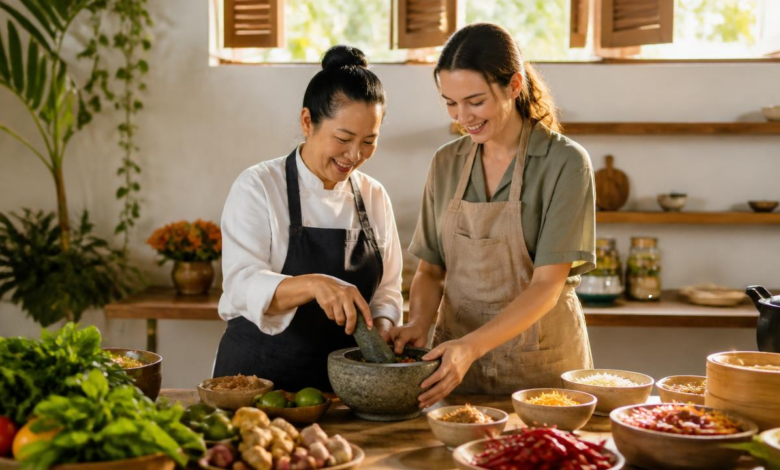
Eating well while traveling is easy. Understanding a place through its food is harder. That is where global cooking classes become more interesting than a reservation list. Instead of sitting down for a meal and moving on, you step into kitchens, markets, farms, and family homes to learn how flavor, memory, and culture connect.
These immersive culinary experiences turn travel into participation. You chop herbs with a local cook, smell spices before you can name them, and hear the stories behind dishes that rarely fit on a menu description. For many travelers, that feels more meaningful than simply ordering the region’s “must-try” plate.
The appeal is broad. Food lovers want technique. Travelers want authenticity. Couples want unusual date ideas. Families want activities that feel educational without being stiff. Even gift-givers are shifting toward experiences people can remember and recreate at home, which is why international cooking classes continue to attract so much attention.
What makes them stand out is not only the cooking. It is the combination of learning, cultural exchange, and place. A pasta lesson in Rome, a curry workshop in Bangkok, or a sushi session in Tokyo becomes a lens for understanding local habits, ingredients, and etiquette in a way restaurants alone rarely provide.
What Makes a Culinary Experience Truly Immersive?
Not every class deserves to be called immersive. Some are fun but generic, with pre-measured ingredients and little connection to local life. A true immersion gives you context along with technique. You leave with practical skills, but also with a clearer sense of why a dish matters in that destination.
Hands-On Learning and Real Skill Development
The strongest classes ask you to participate from start to finish. You knead dough, toast spices, shape dumplings, or balance sauces yourself. That direct involvement is what transforms a demonstration into one of the most valuable hands-on cooking classes a traveler can book.
It also makes the lesson memorable. Watching a chef fold ravioli is useful. Folding it badly yourself, adjusting, and then succeeding is what stays with you. That sense of progress is one of the biggest benefits of hands-on international cooking classes, especially for beginners.
Cultural Immersion and Storytelling
Food carries history, migration, religion, climate, and family tradition. In strong cultural cooking workshops, recipes are not taught as isolated instructions. They come with stories about celebrations, daily routines, regional rivalries, and ingredients shaped by geography.
This is especially true in places where dining etiquette is part of the experience. If Japan is on your list, pairing a cooking class with a guide to Japanese table manners helps you appreciate how dishes are made, served, and shared.
Local Ingredients and Market Visits
Many of the best classes start outside the kitchen. A market visit teaches you how locals shop, what is seasonal, and which ingredients define the region. You begin to notice details that restaurant meals can hide, such as fresh basil in Italy or curry pastes in Thailand.
These market-to-table sessions also deepen your understanding of value. You see how produce is selected, how vendors advise cooks, and how dishes are built around freshness rather than only recipes. That is often when authentic culinary experiences stop feeling like tourism products.
Connecting With Chefs and Locals
One reason people increasingly seek food tourism experiences is the human side. In a small class, the instructor may explain how a grandmother made the same dish, why a shortcut is avoided, or how a local holiday influences the menu. Those details can be more memorable than the final plate.
Shared cooking also lowers barriers. You do not need perfect language skills to laugh over misshapen dumplings or compare kitchen habits. That social ease is one reason cooking classes work well for solo travelers, couples, and mixed-age groups.
Top Cuisines and Destinations for Your Culinary Classroom
Some destinations naturally lend themselves to cooking-based travel. They have strong ingredient cultures, recognizable dishes, and teaching traditions that welcome visitors. The best choice depends on what you want: technical precision, comfort food, market energy, or deeper cultural storytelling.
Italy: Pasta, Pizza, and Regional Identity
Italy remains one of the easiest entry points into learn to cook global cuisine travel. Even simple classes can reveal how much regional identity shapes food. A Roman lesson may focus on fresh pasta or classic sauces, while Naples leans toward dough handling and pizza traditions.
An authentic Italian cooking class Rome often works best when it avoids tourist-theater shortcuts. Look for small groups, ingredient explanations, and regional context. The goal is not just to produce a plate of pasta, but to understand why Roman cooking values a few ingredients used with precision.
Thailand: Balance, Heat, and Street Food Logic
Thailand is ideal for travelers who want bold flavor and immediate sensory payoff. A good class teaches the balance of sweet, sour, salty, spicy, and herbal notes rather than treating dishes as fixed formulas. That approach helps you understand why Thai food feels so layered.
A Thai street food cooking class Bangkok becomes even richer when paired with local eating context. Before booking, it helps to read Bangkok street food for first-timers to understand what you may taste in markets and how cooking lessons relate to the street.
Mexico: Technique, Texture, and Tradition
Mexico rewards travelers who want depth beyond tacos as a catch-all category. Great classes might cover hand-pressed tortillas, regional salsas, moles, masa preparation, or slow-cooked fillings tied to local traditions. Texture matters as much as flavor, and ancestral methods often remain central.
This is also a strong destination for market tours and home cooking sessions. Learning how chiles are selected, toasted, soaked, and blended gives you a much clearer understanding of Mexican cuisine than restaurant ordering alone ever could.
Japan: Precision, Seasonality, and Restraint
Japan offers some of the most disciplined and detail-driven international cooking classes. Depending on the city, you may learn sushi basics, ramen assembly, bento construction, izakaya dishes, or home-style cooking built around seasonality and balance.
If your priority is to learn traditional Japanese cooking techniques, choose a class that explains knife work, broth building, ingredient quality, and presentation. Dietary planning matters too. Travelers with restrictions should review guides on eating vegetarian in Japan and finding halal food in Japan before booking.
India: Spice Literacy and Regional Diversity
India is less one cuisine than many. That is what makes it so rewarding for immersive learning. A class in Rajasthan can feel completely different from one in Kerala or Kolkata. Instead of one “Indian food” template, you discover how local climate, religion, and agricultural patterns shape each meal.
The best classes do more than list spices. They explain layering, blooming, roasting, grinding, and timing. You begin to understand why spice use is structured, not random, and why regional thalis tell a story about balance, hospitality, and local identity.
France: Foundations That Travel Home With You
France is ideal for travelers who want transferable technique. Pastry workshops, sauce lessons, bread classes, and market-driven bistro cooking can improve how you cook far beyond French recipes. Even one well-taught session can sharpen your timing, organization, and ingredient handling.
French classes also highlight discipline without removing pleasure. You learn that classic technique is not about intimidation. At its best, it teaches structure that makes everyday cooking more confident and more enjoyable.
Beyond the Obvious: Hidden Culinary Gems
Some of the most memorable unique cooking adventures happen outside the usual shortlist. Morocco, Vietnam, Georgia, Peru, Turkey, and Greece all offer rich cooking traditions tied to markets, home kitchens, and agricultural landscapes. Lesser-known destinations can feel more intimate and less commercialized.
That is worth remembering when searching for the best global cooking classes worldwide. Popular destinations have excellent options, but smaller culinary scenes can offer deeper local access, better value, and more direct contact with hosts preserving family traditions.
The Benefits of Hands-On Global Cooking Classes
The biggest payoff is not the meal at the end. It is what stays with you after the trip. A strong class changes the way you shop, season, and think about food. It also gives shape to a memory, because you did more than consume it.
Lasting Skills and Stronger Food Confidence
Many travelers return home with recipes they actually use. That may sound simple, but it is powerful. A dish you learned abroad can become part of your weekly routine, which keeps the trip alive in practical, repeatable ways.
You also become less dependent on exact instructions. Once you understand technique, balance, and ingredient roles, you can adapt. That is one reason immersive cooking vacations abroad appeal to both beginners and serious home cooks.
A More Meaningful Way to Travel
Cooking classes slow you down. Instead of rushing between landmarks, you spend hours in one place paying attention. That shift often creates the kind of travel memory people remember most clearly years later.
They also connect food to behavior. If you care about dining customs, tipping, or service expectations, culinary experiences can complement practical reading such as how tipping works in the US when your food-focused trip includes different cultural contexts.
Great for Solo Travelers, Couples, and Families
These classes are flexible by design. Solo travelers gain an easy social environment. Couples get a date that feels collaborative rather than passive. Families can choose beginner-friendly workshops where children participate without needing advanced skills.
For groups, cooking creates a natural shared task. Everyone contributes, conversation happens more easily, and the experience feels earned. That communal quality is part of what makes these classes work across so many travel styles.
Supporting Local Economies and Sustainable Tourism
When thoughtfully run, cooking classes support local instructors, farmers, market vendors, and family businesses. Money stays closer to the community than it often does in standardized tourism models. That makes these experiences appealing to travelers who want their spending to have visible local impact.
They can also encourage more sustainable habits. Seasonal ingredients, smaller groups, and traditional low-waste cooking methods often appear naturally in local kitchens. For travelers, that is a practical way to connect pleasure with responsibility.
How to Choose the Right Cooking Class
Not all classes fit all travelers. The best booking is usually the one that matches your interests, energy, diet, and time rather than the one with the flashiest photos. A little filtering makes the experience much better.
Start With Cuisine and Destination
Ask yourself what excites you more: a specific country, a technique, or a dish. If your dream is ramen broth, Tokyo may make more sense than a broad “Japanese cooking” session elsewhere. If you want market energy, Bangkok or Mexico City might be stronger picks.
Match the Format to Your Travel Style
Group classes are social and often more affordable. Private classes allow deeper customization. Home-based workshops feel personal, while professional schools may offer more structured instruction. Online versions can be useful before or after a trip, but they rarely replace in-person immersion.
Read Reviews for Substance, Not Hype
Look beyond star ratings. Useful reviews mention instructor clarity, group size, hygiene, ingredient quality, pacing, and whether the class felt genuinely local. Vague praise is less helpful than one detailed comment about what was actually taught.
Be Honest About Budget and Duration
A two-hour class can be excellent, but a half-day market-to-table session usually offers more context. Multi-day retreats provide the deepest immersion, though they require a larger budget and schedule commitment. Choose what fits your trip rather than forcing culinary ambition into an overloaded itinerary.
Check Dietary Accommodations Early
If you are vegetarian, vegan, halal, gluten-free, or managing allergies, ask detailed questions before paying. “Can accommodate” may only mean removing one garnish. A strong host can explain substitutions clearly and tell you whether the cuisine adapts naturally or only with major compromises.
Planning Your Culinary Adventure
A little preparation helps you get more from the class. The goal is not to over-plan, but to arrive informed, comfortable, and ready to participate fully.
Book Smart and Know What to Expect
Check meeting points, language level, cancellation rules, and whether transport or market visits are included. Confirm if recipes are shared afterward and whether drinks, aprons, or tastings are part of the experience. These details shape both value and expectations.
Bring the Right Basics
Wear comfortable clothes and closed-toe shoes if requested. Carry water, tie back long hair, and keep a phone or notebook for photos and ingredient notes. If the class includes a market, leave room in your bag in case you want to buy spices or specialty products.
Common Questions, Answered Briefly
Do I need experience? Usually no. Many classes are designed for beginners. Will language be a problem? Often less than expected, especially in hands-on formats. Are these classes worth the price? If they include context, interaction, and real participation, usually yes. You are paying for access, instruction, and memory, not just lunch.
Restaurants tell you what a destination tastes like. Cooking classes show you how that taste is built, why it matters, and who keeps it alive. That difference is exactly why immersive culinary experiences have become such a meaningful part of modern travel.
If you have been planning a trip around meals alone, consider going one step further. Book one of the many global cooking classes available in your destination, choose a format that matches your curiosity, and let the kitchen become part of the journey. The best souvenir may be a recipe you carry home and make your own.