
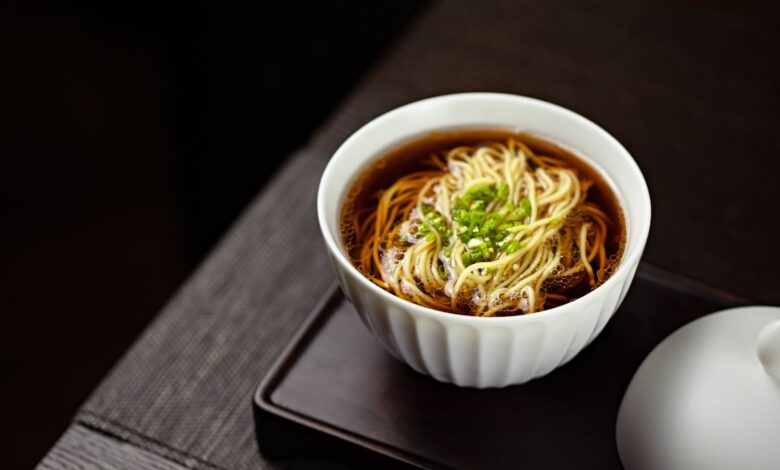
Yes, you can have vegetarian options in Japan. What many first-time visitors do not see is the clear, flavorful stock that is used to season soups, sauces, and braised vegetables, which is generally made from fish. This stock is called dashi, and according to the Umami Information Center, the traditional dashi is made from kelp boiled temporarily with dried bonito flakes (a sea fish). It is possible to create a bowl of pure vegetables with this stock.
When someone says, ‘I do not eat meat,’ that might not close the communication gap because in many professional Kitchens, ‘not eating meat’ typically means not eating beef, pork, and chicken. Fish stock is considered outside of that category, which is why vegetarian food in Japan is often overlooked rather than noticed. Knowing what to look for to prevent hidden fish stocks in your diet entails three things when preparing meals: knowing which dishes contain fish stock; knowing which words a label will use to describe it; and being able to communicate effectively with the kitchen staff. The first thing you should understand is why fish stock was ever needed in the first place.
Why Vegetable-Labeled Dishes in Japan Still Contain Fish
In Japanese cuisine, even the ‘vegetable’ dishes typically have fish in the base, as dashi provides the foundation for flavor in Japanese dishes. This is a defining feature of the way that Japanese cuisine creates depth by using dashi as a light stock instead of relying on fat and slow-cooked meats or bones. Most commonly used dashi is made from dried fish, so you will never see fish listed on a menu as an ingredient in a finished dish.
Dashi is traditionally created using a combination of dried kelp (kombu) and dried fish (katsuobushi). This is not simply an aesthetic combination; the glutamate in kombu contributes to the umami flavor while katsuobushi contributes to the inosinate in the dashi. According to the Umami Information Center, when these two ingredients are combined to produce dashi, the result is a stock that contains approximately 8 times the amount of umami flavor than either ingredient alone. The reason dashi has such a great ability to enhance the flavor of dishes is due to the combination of the two ingredients used to produce it; it is not included as an afterthought, nor because of any oversight.
The information listed below has been checked against the source material for accuracy as of September 2026; please keep in mind that all food labeling regulations, voluntary markings for vegan options, and restaurant recipes are subject to change without notice and you should always verify the contents of any dish you plan to consume; therefore, always refer to the menu item in front of you and the packaging of the food you’re consuming for the most current information regarding the food you have selected.
The concept of dashi made without fish exists. You can make an entirely plant-based stock with just kombu, and a second dashi can be made with dried shiitake mushrooms. These ingredients – kombu and shiitake mushrooms – are staples of both vegan and temple kitchens. Outside of those kitchens, however, those kombu-only dashi and shiitake-only dashi products are not widely available, although there are some kombu-only dashi made for use by travelers listed on byFood. There is a large gap between what is possible and what is likely to be available.
The second part of the issue may be related to a cultural context, rather than a culinary one. In a typical Japanese kitchen, “meat” typically refers to beef, pork, and chicken (with fish considered a separate category and fish stock often regarded as an ingredient option much like salt and/or soy sauce). Based on a review of a survey by Vegewel published by Zenbird in January 2023, there were only 5.9% of 2,418 adult respondents identified themselves as vegetarian or vegan while 19.9% identified themselves as flexitarian (limiting their consumption of animal products to at least one day a week). Consequently, cooks that have never had to separate out dashi from seasoning have no reason to recognize your question as one regarding dashi.
So how did temple kitchens manage without it?
Kikkoman has purposely created the fish-free version. According to Shoshi Takanashi (a Soto Zen priest and specialist in shojin cuisine), the establishment of a completely plant-based temple cuisine, known as shojin ryori, goes back to a decree by Emperor Tenmu in 675 banning the consumption of meat and with that decree having remained established (in name) for roughly 1,200 years thereafter. Writing in Kikkoman’s Food Forum, the Soto Zen priest and shojin specialist Shoshi Takanashi traces the plant-based temple cuisine shojin ryori partly to a decree issued by Emperor Tenmu in 675 banning the consumption of meat, a ban he notes held, at least in name, for about 1,200 years.
Temple kitchens over the centuries have developed their own methods for extracting umami from kelp, dried fungi, beans and vegetable scraps rather than using fish stocks, why there are many people today that do not use fish stocks in Japan does not mean that they are improvising a new technique for you; this is an ancient tradition still existing in some kitchens but not others and an important part of those kitchens is to know how to identify which kitchen you are in.
This is also why “Is this vegetarian?” is not the best question to ask when eating out. Simply asking “What do you use for the liquid base?” will give you an accurate answer and you will find there are fewer restaurants using fish stocks or other forms of seafood than you might think.
Where Fish Stock Hides: A Dish-by-Dish Risk Map for Travelers
In a Japanese meal, risk does not reside in equal amounts on the plate. It is pooled in liquid portions. While grilled vegetables, rice, pickles, tofu and fruit may not be a concern when they are alone, the fish has risk because of the liquid it sits in (the broth that it stews in), as well as the sauce in which it is dipped and the flakes that are put on top last minute.
“”” This is important because the menu describes solid items. For example, the menu may tell you that there are noodles and mushrooms and greens in the bowl, but it does not indicate that it has two litres of stock in which to swim. For example, a posting in the r/JapanTravelTips thread on eating vegetarian in Japan by a foreign tourist in 2024 indicated that they had ordered a sauteed vegetable dish that came with large pieces of pork in it, without any indication that the menu would contain items of meat. While this was one diner in one restaurant, it illustrates an example of how two different documents are used to describe items. “””
| Dish or component | What is usually in it | How often |
|---|---|---|
| Miso soup | Fish dashi | Almost always |
| Udon, soba and ramen broth | Fish dashi, or pork or chicken stock | Almost always |
| Cold soba dipping sauce (tsuyu) | Fish dashi | Almost always |
| Tempura dipping sauce (tentsuyu) | Fish dashi; batter may contain egg | Almost always |
| Clear soup in a set meal | Fish dashi | Almost always |
| Simmered vegetables (nimono), blanched greens (ohitashi) | Fish dashi, often bonito on top | Usually |
| Japanese curry roux | Animal fats, dairy, meat extracts | Usually |
| Salads and dressings | Bonito flakes, fish-based dressing | Sometimes |
| Inari-zushi and vegetable sushi | Dashi in the seasoned rice or pouches | Sometimes |
As you travel down the centre column, a good distinction helps us determine which issues we will encounter: fish can be added to a dish either by sprinkling on top of it or dissolving in it, and they are therefore different problems. For example, if you order a plate of blanched greens with bonito flakes sprinkled on top, you can ask your server to leave them off before the plate is made and can still see them when the plate arrives, so they can be removed if necessary. However, in the case of dashi that has been cooked into a broth, there is no way to see or taste the dashi, and the dashi cannot be removed from the dish (you will not be able to ‘taste around’ it). Therefore, when a kitchen states a dish can be made without fish, the next question to ask is whether they are referring to the topping (bonito flakes) or the stock (dashi).
The least expected way to solve the issue with the dipping-sauce section of the tables is to do away with the sauce altogether. The Japan Travel Guide suggests requesting salt instead of tempura dipping sauce and checking to see if there is a soy-based or kombu-based alternative to cold soba, which makes a potentially difficult situation an easy request. Cold soba served with salt and wasabi is an everyday item on menus, not just a way to avoid an issue.
The use of flavor descriptions for packaged food creates a similar trap in writing as it does in actual products. The term “vegetable” in Japan is used to describe a specific flavor rather than as an indication that a product is suitable for vegans/vegetarians. For example, a retort-style curry sold under the brand name Bon Curry Gran Vegetable contains chicken extract, pork fat, and butter as ingredients, according to the website Is It Vegan? Japan. In addition, Is It Vegan? Japan mentions an important point that everyone should keep in mind when shopping at the supermarket: while pork fat is mentioned in the ingredient listing of the Bon Curry Gran Vegetable, there is no mention of it in the allergy listing located on the back of the packaging. This begs the obvious follow-up question: if the allergy listing does not include information about the contents of the product, then where does the consumer find this information?
How to Read Menus and Konbini Labels for Hidden Dashi
The allergy information on a Japanese food package will not indicate if there is fish stock present because it does not include fish stock in its defined list of allergens.
Currently, there is legislation in Japan that requires a defined list of allergens (known as specified raw materials) to be stated on the label of packaged food. The list changes over time. The latest food labeling update for Osaka Prefecture, dated April 15th, 2026, indicates that as of April 1st, 2026, there have been new items added to the list of specified raw materials by a Cabinet Office Ordinance. This Legislation has now mandated a total of nine specific allergens (shrimp, cashew nuts, crab, walnut, wheat, buckwheat, egg, milk, and peanuts).
There are also twenty other allergens recommended by the system, but are not mandated; and in Akiyama and Adachi’s peer-reviewed paper, the following allergens are included on this “tier one” list as recommended allergens: salmon, mackerel, squid, chicken, and pork. In neither of these two lists is dashi, which generally consists of bonito, mentioned. Checked 20/09/2026.
The ingredient panel is a requirement of all packaged foods. However, if you order a bowl off of a counter and you receive a bowl, there would not be an ingredient panel on it, and therefore, as stated in the Tokyo Metropolitan Government’s guide for Restaurants and Food & Drink Establishments, is a recommendation that Restaurants provide a current and accurate description of all ingredients if an inquirer asks for it, and if it cannot be provided, then the owner must, according to the Bureau of Public Health, say, “I don’t know” and refer the question to someone in charge, so that the proper information can be provided. When you hear a server say that they don’t know, remember that is how the system is working properly for you and is infinitely more helpful than an untrustworthy guess.
Therefore, when you are looking for the “what” for allergies, do not look for the box. Look for the list of ingredients that is basically a combination of nine different strings of characters.
| What you see | What it is | What it means |
|---|---|---|
| 出汁 / だし | dashi, stock | Fish unless kombu or shiitake is named |
| 鰹節 | katsuobushi, dried bonito | Fish |
| 魚 | sakana, fish | Fish |
| 魚醤 | gyosho, fish sauce | Fish |
| ちくわ | chikuwa, fish cake | Fish |
| 豚骨 / 鶏ガラ | tonkotsu / torigara | Pork or chicken stock |
| 卵 | tamago, egg | Egg |
| 乳製品 / バター | dairy, butter | Milk |
| ゼラチン / はちみつ | gelatin, honey | Animal-derived |
While the majority of what can cause problems is covered by the nine, what will slip through the cracks for careful readers is the extract term, which is not included in the “nine.” The chef of Kyoto Green Cuisine has lived and cooked in Kyoto for over 30 years, and he emphasizes the importance of identifying anything identified as being “○○ extract.” Extract is the primary way that animal essence is infused into soup stock, dashi (granulated dashi) and pasta sauces without any fish or meat terms displayed on the packaging.
The marks that are actually worth looking for
The government of Japan has established a standard for vegetarian and vegan products since September 2022. The Japanese Agricultural Standards (JAS) for processed vegetarian and vegan foods (JAS 0025) and restaurants that serve those foods (JAS 0026) were created that month, and translations of those two standards were issued by the Japanese Ministry of Agriculture, Forestry and Fisheries (FAMIC) on September 26, 2023. In addition to the two JAS, the NPO VegeProject Japan operates the label you are likely to encounter most frequently. As of September 2026, VegeProject has certified more than 1,800 products and menu items from over 300 companies that meet its standards for vegan and vegetarian foods. The vegan label indicates that the product does not contain any animal-derived ingredients—including honey, and the vegetarian label indicates that the product does not contain any meat or seafood.
A caution concerning one such word that may seem like a mark but is not a certification mark is “plant-based,” which is written in katakana (puranto-beesu). Many travel guides will recommend seeking out “plant-based” as the most reliable indicator that a menu is consistent with modern vegetarian or vegan standards; however, the certifying body (VegeProject) disagrees with this assessment of plant-based. According to VegeProject, “plant-based” is not well defined in Japan (as opposed to vegan or vegetarian), and a product may be marketed as “plant-based” even though only its main ingredients are derived from plants.
The certification mark has been reviewed by a certifying agency. The descriptive term should not have been reviewed by a certifying organization. When the certification mark and descriptive term appear together, the certification mark is the more reliable indicator.
When buying packaged foods, one step you may want to add to your shopping trip is to take a photo of the ingredient list on the back of the package, not the front, and then run it through your phone’s camera translate feature. This was the recommendation of the Kyoto chef regarding any product label that is too difficult to read. You should be looking for any one of the nine terms listed above, as well as the term ‘extract’ as well; if the translation is unreadable or has a strange name when compared to the product name used on the label, this should be treated as a ‘no’ rather than a ‘maybe’.
What to Say in Japanese When “No Meat” Doesn’t Work
“Meat is not on my menu” addresses about a third of the overall problem – and, in fact, the grammatical issue represents more of a problem than the cultural understanding. The Japanese term used for “meat” (niku, defined as beef, pork, and chicken) is used for describing all three meat types while fish (sakana) is classified separately from meat, as well as fish broth/stock made using just fish (this still does not fall under the same category as fish, it is called dashi). Here’s a direct quote about this issue from Voyapon’s guide: if you order niku wa dame desu, a chef may serve fish dashi or small pieces of seafood, and both you and the chef will be unaware of the misunderstanding.
Japan National Tourism Organization declares in its Vegetarian and Vegan Guide that the term “vegetarian” is a foreign word and described as such, thus is usually understood in the broadest possible sense (i.e., vegetarians may only eat vegetables). Therefore, asking for vegetarian meals is often not enough for you to convey what you mean. When the national tourism organization states that the term will not carry any meaning with the request, it is correct.
The solution? Name your ingredients instead of your type of diet. ByFood recommends that you construct the phrase “I cannot eat X” (where X is the name of the ingredient(s) you cannot eat) to document correctly what you cannot eat. This is because the terms vegan and vegetarian usually have no meaning to the Japanese unless there is a specific ingredient noted, and therefore, you can substitute in other ingredients.
When someone makes a statement instead of asking a question, it can have a big impact on how the kitchen responds. Makiko Itoh, a Japanese food writer and creator of Just Hungry, has written some notes about dining cards that shed some light on this. Most restaurants will prepare dashi (Japanese soup stock) with some kind of dried fish. Therefore, if you’re at a restaurant that uses only vegetable stock, it’s a rare occurrence — so if you’ve said you can’t have dashi, the kitchen can simply let you know they don’t use it in their recipes. If you were to ask, “Is there fish in this?” you would receive either a “yes” or “no” response, depending on whether or not the fish is visible. On the other hand, saying, “I can’t have dashi,” shifts the focus to the stock pot.
The following lines do all of the heavy lifting. Each of the guides credited below has published the original wording, rather than a translation.
| What you want to say | Japanese | Romaji |
|---|---|---|
| I can’t eat meat or fish | 私は肉と魚が食べられません | Watashi wa niku to sakana ga taberaremasen |
| Please don’t use dashi | だしを使わないでください | Dashi o tsukawanaide kudasai |
| Fish stock is also not okay | だしもダメです | Dashi mo dame desu |
| Without bonito flakes | 鰹節なしで | Katsuobushi nashi de |
| No meat, fish, egg or milk | 肉・魚・卵・牛乳なしで | Niku, sakana, tamago, gyunyu nashi de |
| Could you make it without the meat? | お肉なしで作って頂けませんか | Oniku nashi de tsukutte itadakemasen ka |
The lines in question come from the vegetarian dining guides produced by byFood, Japan Travel and Best Tokyo. The direct question regarding stock — sakana no dashi wa haitte imasu ka — was taken from Voyapon. Looking down the centre column, it’s easy to miss the commonality between the lines: nashi de is the word used for “without,” which changes any of the lines from an inquiry to a request, which is how a busy kitchen would respond.
If you can say it, say it. If you can’t say it, show it. A line written is always pronounced correctly, and the line can go from the server to the cook without any loss of meaning. Itoh provides free print-and-cut cards specifically for this purpose. In addition to offering two separate vegetarian and vegan versions of the cards, she sets herself apart by admitting that they do not take any responsibility away from the person who serves you; instead, they allow the serving person to better serve you.
Words are just words, however, because they rely on a kitchen’s ability and willingness to change. They do nothing for a kitchen with one pot of stock as the foundation for all of the dishes they make.
What to Order for a Guaranteed Vegetarian Meal: Shojin Ryori and Vegan Ramen
There is one type of kitchen that would have fish in it, and another type of kitchen that does not have fish in it. All of the previous posts have been about kitchens without fish in them. The three types of kitchens that do not have fish in them include: temple cuisine, vegan restaurants where the menu consists only of vegan dishes, and the only dish on a vegetarian menu that is certified as being vegan.
The temple cuisine is the original and most established type of kitchen without fish, since it is not simply substituting one ingredient with another, but rather, is simply not including any animal-based products or by-products. An example of this type of kitchen would be Shigetsu, a Shojin restaurant located within Tenryu-ji Temple in Kyoto, Arashiyama area, where no animal-based products are used, and the meal courses are created using only vegetables, mountain vegetables, wild herbs, and seaweeds. Shigetsu states on the temple’s own site that it uses no animal-derived ingredients at all, building its courses from vegetables, mountain greens, wild herbs and seaweed.
The only downside to this type of establishment is that you need to book in advance to visit. Up to September 20, 2026, the cost of each of the three meal courses is ¥3,800, ¥6,500, and ¥9,000, respectively, plus ¥500 for admission to the Zen Garden; each of the three meal courses requires a two day advance booking for the ¥3,800 course, and a three day advance booking and at least two people for the other two meal courses. This restaurant serves lunch from 11:00 a.m. until 02:00 p.m. and is closed on Thursdays. The main reason to go and have a meal at this establishment is because of the quality of the meal, but it is best not to show up there at 06:00 p.m. on a Thursday and expect to be able to sit down and have dinner.
The availability of vegan ramen has rapidly grown from a novelty to an expected food item at the second tier of vegan restaurants, with T’s Restaurant in Jiyugaoka as an example. T’s Restaurant has an all-plant-based menu of dishes that include ramen and gyoza and use soy meat and soy milk as primary ingredients. There are also T’s Tantan branches located in Tokyo stations.
The reason for creating T’s Restaurant, according to its owner Masako Shimokawa, is that, while many Japanese foods are typically considered to be healthy, the reality is that most include bonito, making it difficult for vegans to eat. In essence, this statement is an explanation of Ms. Shimokawa’s vendor category, but is stated from the perspective of someone who operates in a Japanese kitchen. The geographic limitation of T’s Restaurant is that it is located in one neighbourhood of Tokyo, making it a destination rather than a place of safety.
The third tier of vegan restaurants is the most affordable and widespread and has the most subtle traps. For example, CoCo Ichibanya, a chain of restaurants that serve curry, has on their English-language menu a vegetarian curry for ¥683 (with taxes), completely composed of plant materials. On the same page, listed under a different heading, there is also a “vegetable curry” for ¥918 (with taxes).
There are two distinct items offered by the chain. The vegetable topping is on the standard sauce, while the vegetarian sauce is an entirely different product. If you mistakenly select the vegetable option, you will receive a different dish than what you expected; again creating confusion between “vegetable” means flavour and “vegetarian” means no animal products, regardless of price or currency. The chain provides a note indicating that some locations may not serve the vegetarian curry option. Therefore, if you are in an unknown city, it is wise to verify whether that option exists at that site’s location.
A word of caution regarding restaurant certification marks, as it is easy to misinterpret them. VegeProject Japan, the regulatory body overseeing the certification of restaurants and accommodations, only grants certification when there is at least one primary menu selection available that meets vegan standards. Thus, having a mark on the restaurant door signifies a specific dish’s credentials, while a mark in a restaurant does not provide any information regarding kitchen practices or the credential status of all items served within the establishment. The question to ask in a certified restaurant is, “Which item does the mark belong to?”
Neither the restaurant certification marks nor the VegeProject logo can provide you with anything other than access to a meal at 09:30 in an area where the nearest certification can be found two hours away by train.
How to Eat Vegetarian from Convenience Stores Outside the Big Cities
In a nutshell, outside the metropolitan areas, the convenience store is a good option and is actually more efficient than anticipated. However, browsing isn’t how convenience store products usually work. The marketing on the front of the boxes uses English; the actual product information is on the back and is easiest to navigate if you already know which few items to trust by default.
The primary items are rice balls. A July 27, 2026, Voyapon guide to 7-Eleven onigiri listing rice balls sold at 7-Eleven lists four rice balls that are generally safe: umeboshi (sour pickled plum) (the tartness of the umeboshi enhances the flavor, so umeboshi rice balls usually do not need dashi); simmered kombu; shio-musubi (plain rice ball with no filling and no seaweed, and the Voyapon guide described as a one-size-fits-all). The guide also mentions the danger of looking for kombu on a shelf. Even though kombu is generally a vegetable, some manufacturers simmer their kombu in combined forms of kombu dashi & katsuobushi dashi; therefore, the most ‘delicious-looking’ savory flavor option on the rack may be the one that requires the most scrutiny of the label.
This is what I am referring to when I talk about “The konbini trap”. I am writing from Tokyo in June, 2026. The blogger at The Tokyo Chapter wrote a post about purchasing a convenience store salad labelled as tofu and vegetable and discovering shredded chicken at the bottom, as well as purchasing a bakery item advertised as seasonal vegetable bread, only to find a piece of sausage resting on top. The blogger observed that the blue and green product lines from FamilyMart, which are suggested to be plant-based, are not truly vegan, and include a note in Japanese that states that they may contain animal products.
These are just a single shopper’s experiences, and can be used as a reminder to check the back of the product; just because one person reports something doesn’t mean it’s true for the whole chain.
In instances where a plant-based line does exist, it is generally beneficial to locate it. Natural Lawson provides soy-based substitutes and plant milks, and the Japan Travel guide suggests looking for the words 植物性 (plant-based) and ビーガン (vegan) on supermarket packaging, along with tofu, natto, ready-to-eat rice, and instant miso soup using a fish-free base. With these, plus four rice balls, it is possible to create a very solid meal within a shop that is roughly the size of your living room: a few onigiri, edamame beans, tofu, fresh fruit, and tea.
If you’re trying to eat on a budget in Japan, this combination of food is also the most affordable option. This is a different topic that this website covers through its guide, which details how much you would spend on a day’s worth of food from a convenience store. The information from above will help you keep track of what items you can eat on your budget if you cannot eat fish or seafood.
Being consistent will make this process much easier. On your first day in a new city, purchase the same two or three items from the same convenience store and save the packaging until you check it before leaving. This way, you will create your own personal “approved” product list, eliminating the need for you to read through every label every evening. Over the course of your two-week trip, you will save time and effort by not having to do additional research each evening.
Where Most Travellers Get Caught Out
The usual mistake travellers make is to focus on the fish part of the dish as being the only visible item that contains fish or meat. However, the liquid that is under the vegetables is also fish stock and often contains dashi (fish stock). Therefore, when ordering, instead of asking for “vegetarian”, ask your server, “Does this dish have dashi?”. If yes, consider it not vegetarian, if no, consider it vegetarian. Asking this question first creates a much easier and simpler dining experience while travelling to Japan as a vegetarian. If you do not ask this question, it can be difficult to determine what ingredients were used after you order a dish.
Frequently asked questions
Is sushi safe to order as a vegetarian?
The following sushi and rice are confirmed as plant-based staples: kappa maki, kanpyo maki, takuan maki and inarizushi. Gurunavi recommends checking out two examples of plant-based sushi first: tamagoyaki nigiri, which is usually made with dashi added to the egg omelette; and simmered toppings that have been prepared using a stock that could be made from fish.
Can I book a place to stay in Japan where every meal is vegetarian?
Temple lodgings (shukubo) provide dinner and breakfast meals of shojin ryori and JNTO provide’s a guide to temple stays and also notes that the room rate generally includes dinner and breakfast. When making your reservation, check on how the payment is made as there are some temples that only accept cold hard cash.