
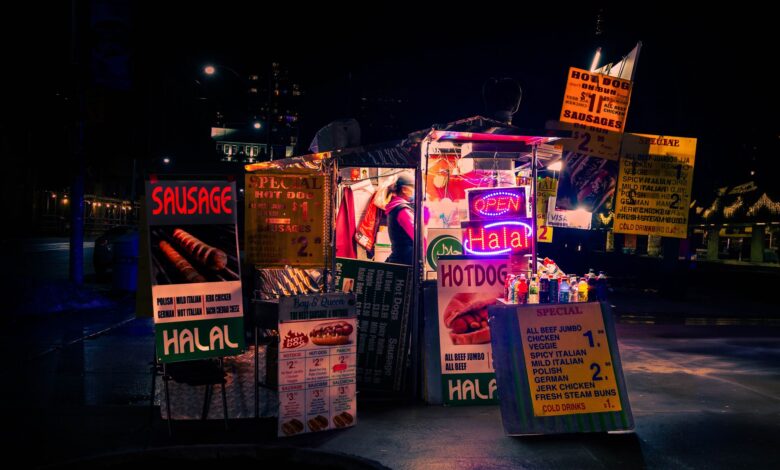
Halal Food in Japan: Finding Certified Meals in Any City, Step by Step
You can eat halal in Japan, but you cannot do it by learning one logo and looking for it. No government body certifies halal food there, so private organisations issue their own marks to their own standards, and the same word on two doors can mean two different things. Japan’s own tourism body states on its Muslim travellers page, checked on 20 September 2026, that the country has no central agency for halal accreditation.
So the job changes shape: instead of recognising a seal you already know, you are working out who issued this one, what their tier actually covers, and whether the certificate on the wall has expired. The harder half is not the meat. Pork is easy to name and avoid; what quietly disqualifies a dish is usually a seasoning — a splash of rice wine in the glaze, stirred in long before the plate reaches you. Reading a certificate and reading a label are the two skills that make halal food in Japan manageable. Both of them start from the same place: why no single seal exists.
Why There Is No Single Halal Seal in Japan — and What That Changes for You
In Malaysia one government department issues the halal mark, and you learn that mark once. Japan has no equivalent. No ministry owns halal here, there is no national logo, and there is no single register you can hold a certificate up against — so the mark in a Tokyo window and the mark in an Osaka window may have come from two organisations working to different rules. Everything below was checked against the certifiers’ and institutions’ own pages on 20 September 2026; each body sets and revises its own standard without notice, so confirm your own case with the certifying body or the venue before you rely on it.
The clearest proof of the gap sits where you would least expect it. Japan’s Ministry of Agriculture, Forestry and Fisheries does keep a halal and kosher information page, and it does publish a list of Japanese halal certification bodies for export, dated 27 July 2026. The page also opens by saying that the information is a compilation of published material and does not represent the ministry’s own view. The government keeps the names in one place. It does not stand behind them. Compare that with the Halal Malaysia portal, where JAKIM — the Department of Islamic Development Malaysia — runs the application system and issues the certificate itself.
The certifiers say the same thing about themselves. The Japan Halal Association describes Japan, Europe and the United States as places where voluntary organisations perform halal certification without government accreditation, and notes that no uniform global certification standard exists either — which is why it wrote its own in 2019. That is not a complaint about Japan. It is a description of the machinery you are about to use.
Here is what it does to a restaurant. Because no one body defines the standard, a venue that wants a mark picks a certifier, and different certifiers audit different things. Japan’s national tourism body puts it as an absence of centralized direction, which leaves restaurants to figure the requirements out on their own and makes a consistent standard hard to hold across the country. So the question is never “does this place have a halal logo.” It is “whose logo is this, and what did that body actually check?”
That also explains the scarcity you are about to notice. Certification is a purchase, not a formality: Food Diversity, a trade publisher covering halal food in Japan, reports typical restaurant certification running to roughly ¥300,000–¥500,000 and sometimes beyond, with manufacturers facing figures in the millions of yen, and it records businesses abandoning the process on cost. It adds a second disincentive that has nothing to do with money: owners who display a halal mark can find non-Muslim customers reading the shop as not for them, in a country where the overwhelming majority of diners are not Muslim. Treat those figures as reported industry analysis rather than a fixed price list.
Read together, the scarcity stops looking like indifference and starts looking like arithmetic — which is useful, because it tells you where to spend your attention. You are not hunting for a seal that a shop forgot to apply for. You are choosing between a small certified set, a much larger set that has decided how far it can go without certifying, and everywhere else. Telling those apart starts with the body whose name is on the paper.
Who Certifies, and With What Recognition: Halal-Certified, Muslim-Friendly and Pork-Free
Three phrases do almost all the work on Japanese shopfronts, and only one of them is reliably about a document. Pork-free is a menu statement: it says a dish contains no pork, and says nothing about the stock, the seasoning, the oil or the pan it was cooked in. Halal-certified and Muslim-friendly can each be a formal certificate issued by a named body after an audit — or a phrase a manager printed on a sign. Which one you are looking at depends on who issued it, so the body comes first and the adjective comes second.
A handful of organisations do most of the certifying, and each publishes its own scheme. This is what their own pages set out, read on 20 September 2026.
| Certifying body | Restaurant schemes it publishes | What its strictest restaurant tier requires |
|---|---|---|
| Japan Halal Association (Osaka) | Halal Restaurant, Muslim-Friendly Restaurant, Kitchen | Meals entirely halal and no sale of alcoholic drinks |
| Nippon Asia Halal Association (Chiba) | Fully Halal, Halal Kitchen, Muslim-Friendly | Every menu item, ingredient, process and pest-control step audited; no alcohol served |
| Muslim Professional Japan Association (Tokyo) | Halal certification plus a separate Muslim Friendly certification | Published as two streams, one for export and one for inbound venues |
The pattern that matters is in the middle column: every one of these bodies runs more than one restaurant tier, and the tiers are not the same across bodies. So a certificate tells you two things at once — which organisation vouched for the venue, and which of that organisation’s tiers the venue reached.
Recognition is the second variable, and it is easy to over-read. The Japan Halal Association lists approvals from Malaysia’s JAKIM in 2012, Singapore’s MUIS in 2013, the Gulf accreditation body GAC in 2016, then Thailand, Indonesia, Taiwan and, in 2024, Turkey and Indonesia’s BPJPH. The Muslim Professional Japan Association publishes a comparable list and states that the agreements mean its certifications are accepted by other countries without re-certification. Read the sentence carefully, though: MPJA frames that recognition around exporting halal product worldwide. It means a foreign authority has accepted the Japanese body’s system. It does not mean a foreign authority inspected the restaurant you are standing in.
Nobody audits the auditors, either, and the certifiers say so themselves. The Japan Halal Association describes the absence of a way to measure the credibility of certification bodies in countries without government accreditation as a recognised problem, and explains overseas approval as the workaround the industry invented to fill it. That is a candid thing for a certifier to publish, and it sets the honest ceiling on what any Japanese halal mark can promise.
“Muslim-friendly” means three different things, and only one of them is loose
This is the single most expensive misunderstanding in the topic, because the phrase carries a formal meaning and a marketing meaning at the same time.
At the Japan Halal Association, Muslim-Friendly Restaurant Certification is a certificate where the meals are completely halal and the only difference from its full Halal Restaurant Certification is that the venue also sells alcoholic drinks. The association is blunt about the wording, noting that “Muslim friendly” carries a strong element of confusion because Muslims reasonably hear it as halal, and that under its schemes there is no such thing as slightly halal — at its certified restaurants, meals are halal only.
At the Nippon Asia Halal Association, the same phrase sits at the bottom of three tiers. On the published account of NAHA’s standards, its Fully Halal tier bars alcohol from the premises, its Halal Kitchen tier allows alcohol to be sold with a designated storage and glass-washing area, and its Muslim-Friendly tier allows a venue to serve non-halal food as well, provided the halal food is verified and kept to its own utensils and designated area. Under all three, the owner and chef may be non-Muslim.
And on a window with no certificate behind it, the same two words can mean a manager took the pork out of one dish.
So the threshold question is not “certified or friendly?” It is whose friendly — and one follow-up settles it: which body issued this, and which of their tiers is it? If the answer names a body and a tier, you can look the scheme up. If it names neither, you are being offered a promise rather than an audit, and you can still eat there, but you are the one carrying the risk.
Where you set that line is a religious judgement, not a factual one, and the bodies above disagree with each other about it in public. Decide your own threshold before you travel — alcohol on the premises, shared equipment, non-zabiha meat — because deciding it at a doorway, hungry, at nine in the evening, is how people end up settling for whatever is in front of them. The next thing to size up is how often that threshold will actually be available.
Where It Is Easy and Where It Is Hard: Tokyo, Osaka, Kyoto and Smaller Cities
Two numbers describe Japan’s halal map, and they are not describing the same thing. Halal Gourmet Japan, the database that Japan’s own tourism body points travellers toward, advertises more than 1,120 Muslim-friendly restaurants nationwide. Filter the same database to venues it marks as halal certified and the result runs to seven pages of listings, with its prefecture shortcut offering just five prefectures — Chiba, Tokyo, Aichi, Kyoto and Osaka — as checked on 20 September 2026. Those are the platform’s own counts for its own inventory rather than an official register, and listings rotate. The shape still holds: the wide map is Muslim-friendly, the narrow one is certified, and the threshold you set in the last section decides which map you are actually reading.
That difference is why generic advice to “stick to Tokyo, Osaka and Kyoto” is only half useful. The risk in a two-week itinerary is not spread evenly across fourteen days. It clusters on particular ones.
| Where you are | What the listings realistically offer | The planning move |
|---|---|---|
| Central Tokyo, central Osaka | Both certified and Muslim-friendly venues, several cuisines, walkable clusters | Eat your riskiest meals here; stock up here |
| Kyoto, Nagoya, Fukuoka, Sapporo | A moderate scene, thinner on certified, concentrated near stations and tourist districts | Book dinner rather than wandering |
| Smaller cities and rural day trips | Dedicated halal dining drops away sharply | Shift from restaurant-hunting to carrying food |
| Major airports, a few large hotels | Halal or Muslim-friendly service, sometimes only on advance notice | Ask at booking, not on arrival |
| Supermarkets and convenience stores | Mostly frozen halal meat where stocked at all; no national halal label | Read ingredients; plan a kitchen |
| Group set-course meals | A fixed menu chosen for the group, not for you | Intervene at the booking stage |
The bottom three rows are where most trips actually come unstuck, so they are worth taking one at a time.
Outside the big cities, Japan’s national tourism-facing guide japan-guide.com states flatly that halal or Muslim-friendly restaurants become even more difficult or impossible to find, and that while some supermarkets in major cities carry halal products, these tend to be frozen halal meat rather than anything ready to eat — the average Japanese supermarket stocks none. Halal Navi, a listings publisher whose guidance carries a named lead auditor, put the same point in planning terms in June 2026: in smaller prefectural cities the density of dedicated halal dining drops sharply, and the workable response is to stop hunting restaurants and start provisioning — a stay with a kitchen, and a bag of staples bought while you were still in a big city.
Accommodation deserves its own sentence, because it quietly decides several meals. The same guidance notes that traditional ryokan meal plans almost always include pork, shellfish or dishes built with sake or mirin, and that booking a room-only rate is the more reliable move. That is a booking-screen decision, not a doorway decision.
The group meal is the case nobody plans for. On Quora, a contributor who described living in Japan for two years wrote several years ago that cities are workable and rural areas harder, and that the real difficulty is the nomikai — the all-you-can-eat-and-drink group format, where the menu is fixed for the table. He recalled an observant colleague left with orange juice, lettuce, edamame, a fish dish and a smear of wasabi. That is one person’s account of one workplace, not a statistic, and the mechanism behind it is simple enough to act on: a set course is ordered as a block before anyone sits down, so the only moment you can change it is when the booking is made. Ask who is booking, and ask for a separate order.
Ramen is the neat illustration of why a venue’s category matters more than its cuisine. Another long-term resident on the same platform pointed out that Hakata ramen is defined by its pork-bone broth, so there is no halal version of that dish — while halal ramen from other regions exists, because those recipes were built around a different stock. The dish is not the unit of analysis. The broth is. And that is the seasoning problem arriving early, which is the layer no certificate on any wall can cover for you.
Before any of that, though, there is a certificate on a wall to read.
How to Check the Certificate at the Door: The Five Points Worth Checking (and the Right Question for Your Hotel)
A certificate on the wall is where the check starts, not where it ends. Certificates expire, scopes are narrower than they look, and a framed document tells you nothing about who issued it unless you read the name. The practical guide tabemasen puts the problem plainly: some businesses display old or invalid certifications, and a legitimate certificate carries four things — the certifying body’s name and logo, an expiry date, the scope of certification, and a certificate number. Add the tier question to those four and you have a check you can run in under a minute, standing in the doorway.
| What to look for | Why it matters | If it is missing or unclear |
|---|---|---|
| The issuing body’s name and logo | The logo alone means nothing until you know who is behind it | Read the full organisation name, not the initials |
| An expiry date | Certification is an ongoing commitment with audits typically run annually | Treat an undated or lapsed certificate as no certificate |
| The scope | Certification may cover specific menu items, a kitchen, or one branch only | Ask which dishes and which branch it applies to |
| A certificate number | It is what lets you cross-check the claim against the issuer | Ask for it, then look it up |
| The tier | “Halal certified” and “Muslim-friendly” are formally different certificates | Ask which one this is |
Take the first row seriously, because initials are where this check most often goes wrong. Two different Japanese organisations use the abbreviation JMA: the Japan Muslim Association, founded in 1953 and recognised by Malaysia’s JAKIM, and Japan Muslim Access, founded in 2017, which issues its certification free of charge. Same three letters, separate bodies, different standards, different logos. If the certificate says JMA, the abbreviation has not told you anything yet — the full organisational name has.
The number exists so you can leave the doorway and check independently. The larger certifiers publish their own lists of certified establishments: the Japan Halal Association maintains a public list of certified companies and products, and MPJA and NAHA maintain equivalents. If a venue claims certification and does not appear on the issuer’s list, the honest reading is that the certification may have lapsed rather than that someone is lying — restaurants close, renewals slip, and lists lag. Either way it is your cue to ask.
The fifth point is the one that changes what arrives on the plate, and the certifiers are more precise about it than most guides are. Under the Japan Halal Association’s own restaurant schemes, Halal Restaurant Certification covers stores where meals are completely halal and no alcoholic drinks are sold, while Muslim-Friendly Restaurant Certification covers restaurants where the meals are equally halal but alcoholic drinks are sold. The association states the difference between its two tiers is the alcohol sale — not the food. That matters twice over. It means a Muslim-friendly certificate from this particular body is a stronger signal than the phrase suggests, and it means the tier you need depends on whether your own threshold is about what you eat or about the room you eat it in. JHA itself calls “Muslim friendly” a term with a strong element of confusion, noting that Muslims generally hear it as a statement that the food is halal, with no such thing as “a little bit halal.” An uncertified restaurant using the same phrase about itself is making no such commitment.
It is worth being clear about what the document cannot do. No halal certifier in Japan is independently audited by a government agency or a neutral third party, so you are relying on each body’s own inspection and enforcement. Recognition by a foreign authority such as JAKIM means that body’s system and standards were audited and approved — it does not mean JAKIM inspected this restaurant, and that recognition is often limited to specific categories and subject to renewal. The certificate is good evidence. It is not a guarantee, and no amount of checking converts it into one.
Hotels work differently, because the failure there is not a wall certificate — it is a lead time.
Japan’s japan-guide, updated on 12 April 2026, notes that halal or Muslim-friendly dining can be found at major airports and a few leading large hotels, but that some of them require prior reservations of at least a few days to prepare halal meals. In practice the notice period varies by property: Halal Navi reports that most hotels on its verified list ask for three to seven days, and Hotel Chinzanso Tokyo states that its halal-friendly kaiseki course must be reserved at least seven days ahead. A ryokan may want longer. All of those were checked on 20 September 2026 and are the properties’ own terms rather than a national rule, so confirm the number with the property you actually book.
Which makes the question itself the deliverable. “Do you have halal food?” invites a polite yes, because the person answering wants to help and may be thinking of the pork-free omelette. Ask at the booking stage instead, in writing, and ask for specifics:
- Can you prepare a halal meal for my stay, and how many days’ notice do you need?
- Is the meal prepared with halal-certified ingredients, and is it cooked with separate utensils?
- Who certifies the ingredients you use, and can breakfast be included?
- If you cannot prepare one, may I bring in outside food, and is there a fridge or kettle in the room?
That last question is the one that quietly saves trips, because a no to the first three plus a yes to the fourth is still a workable week. Send it by email so the answer exists in writing before you arrive.
The certificate and the booking email between them cover the two decisions you make deliberately. The harder failures are the ones nobody decides at all — the ones already stirred into the sauce.
Where Alcohol and Pork Hide in Japanese Food
Japanese food does not hide alcohol and pork in the same way, and knowing the difference tells you where to look.
Alcohol is in Japanese cooking as a technique rather than a flavour. Kikkoman, which manufactures the stuff, describes cooking sake in its own glossary as adding umami and a sweet, mellow flavour, eliminating strong odours and tenderising meat, used in steamed seafood, soups, sauces and marinades. That is a job description, not an ingredient list — which is exactly why it never appears in the name of a dish. Nothing on a menu is called “grilled fish with rice wine.” The rice wine is in the method.
Then there is the detail that explains why the bottle is so easy to miss. The same page notes that Japan’s Liquor Tax Act requires cooking sake to have salt added to prevent its consumption as sake, and that because cooking sake escapes the liquor tax it is cheaper. So the product sits on the seasoning shelf next to the soy sauce rather than behind the drinks counter, at a grocery price, looking like a condiment. Halal Navi’s seasonings guide, published on 6 July 2026 and halal-reviewed by its named lead auditor, makes the consequence plain: the added salt does not reduce the alcohol content in any meaningful way. A tax rule reclassified it. Nothing was removed from it.
The figures are worth carrying, because they separate three products that share a shelf and a name. As checked on 20 September 2026, hon-mirin (本みりん) — true mirin — runs at roughly 14% alcohol, which is sweet-wine territory; Halal Navi reports cooking sake (料理酒) at 13–16%, while Kikkoman puts its own at around 15%; and mirin-style seasoning (みりん風調味料) comes in under 1%, sweetened with glucose syrup instead of fermented. Standard soy sauce carries about 1.5–2% alcohol as a by-product of fermentation, and plain rice vinegar is generally well under 0.5% because the fermentation converts the ethanol into acetic acid. Formulations change, so the label on the bottle in front of you beats any figure in any guide, including this one.
Those numbers matter because certifiers do not treat them as one problem. The distinction they draw, as tabemasen sets out, is between alcohol that was added and alcohol that arose: mirin is a rice wine deliberately stirred into the pan, which Japanese certification bodies uniformly treat as non-halal, while the trace alcohol in soy sauce is a fermentation by-product of the same kind found in vinegar or bread, on which scholars and certifying bodies genuinely differ. Certified restaurants sidestep the argument entirely by buying halal-certified soy sauce.
Which brings up the objection every traveller eventually hears: doesn’t the alcohol cook off? The manufacturer says most of it evaporates when heated, and even advises boiling it deliberately if you do not want alcohol in the finished dish. That is a real physical claim about a pan. It is not how certification works — the schemes described earlier govern what may be brought into the kitchen, not what is left after twelve minutes on a hob — and it is not a question this article can settle for you. Where trace or evaporated alcohol falls is a matter for your own scholar or your home country’s halal authority, and observant travellers land in different places on it in good faith. What the guide can do is tell you what is in the pan.
Pork arrives by a different road. It is usually not meat on a plate but an ingredient inside another ingredient: gelatin (ゼラチン) in puddings, mousses and gummy sweets, which in Japan is commonly pork-derived unless the label says 植物性; lard (ラード) in some fried food, bakery items and Chinese-style cooking; shortening (ショートニング) and margarine (マーガリン) in bread and pastry, which may be plant or animal; emulsifier (乳化剤) with its source unstated; and pork extract (ポークエキス, or 豚骨エキス) in instant noodles, curry roux, soup powders and ready meals. None of those is visible. All of them are on labels.
The third road is the one that catches people who have already learned the first two. Dashi is the stock under almost everything savoury, and Halal Food Maps makes the useful point that menus rarely mention it at all, because it is assumed as background flavour. Its own ingredients are usually fine — kombu and shiitake are plants, and fish is broadly uncontroversial across the major schools — but the instant versions used in most kitchens may carry added mirin or soy sauce, and some broths sold informally as dashi are pork-bone based. Dashi turns up in:
- miso soup
- ramen, udon and soba broth, and the seasoning base beneath it
- tamagoyaki, the rolled omelette often served at breakfast
- chawanmushi, the savoury steamed custard
- nimono, simmered vegetables and tofu
- ochazuke, furikake, and dashi-seasoned ready meals
And here is the honest ceiling on all of this. Japan’s food labelling rules permit grouped terms, so a package may legitimately say 調味料(アミノ酸等)— “seasonings (amino acids etc.)” — without itemising what is inside. Hydrolyzed protein (たん白加水分解物) can come from pork, chicken or soy with the source rarely disclosed, and 香料 means only “flavouring.” A diligent reader can exhaust a label and still not know. That is not a failure of attention; it is the limit of what the label is required to tell you, which is why the certificate, the question and the shortlist all keep their jobs.
Still, most of what you need is printed on the packet in a handful of repeating characters — and there is a short list of them worth having on your phone.
Phrases and Kanji for Ordering Without Nasty Surprises: At the Restaurant and in the Supermarket
There is a reason this section has two halves, and it is not symmetry for its own sake. Japan treats a packet and a plate as two different legal objects.
Packaged food is governed by the Food Labeling Act, and the regime is strict: as tabemasen’s labelling guide sets out, nine allergens must be declared on all packaged food sold in Japan, down to a threshold of 10 parts per million, with the vague Western-style “may contain” hedge deliberately kept out of the framework. Restaurants are a different matter. That Act applies to packaged, processed food and imposes no equivalent obligation on restaurants, izakayas or food stalls — unlike the European Union, where restaurants must communicate allergen information. Some chains publish allergen charts voluntarily. The forty-year-old neighbourhood place will not have one.
So the supermarket rewards reading, and the restaurant rewards asking. Different tools, in that order.
In a shop, the block you want is headed 原材料名 (genzairyō-mei), the ingredient list, usually on the back. Allergens are shown one of two ways: noted in brackets after each ingredient, or gathered into a single summary line that begins 一部に and ends を含む — “partially contains.” Find that line and you can scan a label in seconds without reading Japanese.
One caution that matters more for halal than for allergies: pork and gelatin sit on Japan’s recommended list, not the mandatory nine, so they are not guaranteed to appear in that convenient summary line. They will normally still be named in the ingredient list itself, which is where you actually have to look. And anything scooped or assembled in-store — oden from the hot counter, steamed buns — may not carry a full label at all, because it was not factory-sealed. Sealed packets are the ones that talk.
These are the characters worth having on your phone, grouped by the route they take into the food:
- Pork and its derivatives: 豚 and 豚肉 (buta, butaniku), ポークエキス (pork extract), 豚骨 (pork bone), ラード (lard), ゼラチン (gelatin — commonly pork-derived in Japan unless marked 植物性, plant-based)
- Alcohol: アルコール, 酒精 (added alcohol), 本みりん (true mirin), みりん and 味醂, 料理酒 (cooking sake), リキュール (liqueur)
- Fats and additives with an unstated source: ショートニング (shortening), マーガリン (margarine), 乳化剤 (emulsifier), たん白加水分解物 (hydrolyzed protein), 香料 (flavouring)
- Useful to recognise as lower-risk: みりん風調味料 (mirin-style seasoning, under 1% alcohol), 植物性 (plant-based)
Now the restaurant, where the single most useful piece of advice is about how you ask rather than what you say. Halal Food Maps, whose phrase reference was published on 22 July 2026, makes the point that most restaurants in Japan are not halal-certified and most staff have never been asked a halal question before — so leading with the word “halal” often produces a blank rather than an answer, while a specific, single-ingredient question gets you somewhere. Ask about mirin. Ask about the broth. Ask about the pan. One thing at a time.
The second tip is almost embarrassingly practical: show the Japanese text on your phone screen instead of pronouncing it. Staff in Japan are used to reading a phrase pointed at them, and a screen removes the accent problem entirely.
| English | Japanese | Romaji |
|---|---|---|
| Does this contain pork? | これには豚肉が入っていますか? | Kore ni wa buta-niku ga haitte imasu ka? |
| Do you use cooking sake or mirin? | 料理酒やみりんを使っていますか? | Ryōrishu ya mirin wo tsukatte imasu ka? |
| Is the broth made from fish or meat? | だしは魚や肉から取っていますか? | Dashi wa sakana ya niku kara totte imasu ka? |
| Do you use lard or animal fat in cooking? | 調理にラードや動物性の油を使っていますか? | Chōri ni rādo ya dōbutsu-sei no abura wo tsukatte imasu ka? |
| Is this cooked in the same pan or oil as pork dishes? | これは豚肉料理と同じ鍋や油で調理していますか? | Kore wa buta-niku ryōri to onaji nabe ya abura de chōri shite imasu ka? |
| Can you leave out a named ingredient? | 〇〇を抜いてもらえますか? | ⟨ingredient⟩ wo nuite moraemasu ka? |
| Could you check for me? | 確認してもらえますか? | Kakunin shite moraemasu ka? |
| I don’t eat pork or drink alcohol for religious reasons. | 宗教上の理由で豚肉とお酒を口にしません | Shūkyō-jō no riyū de buta-niku to osake wo kuchi ni shimasen |
That last line does quiet work. It explains the request without asking anyone to become an expert in certification, and it is the sentence that most often turns a shrug into a trip to the kitchen to check.
Two more things worth carrying. The Japan National Tourism Organization runs an official Muslim travellers guide on its own government domain, which Halal Food Maps recommends as a fallback for its Muslim Services inquiry sheet when a conversation stalls — an official document generally carries more weight than a traveller’s own note. And a written card in Japanese, prepared before you fly, beats a live translation every time: several publishers generate one free, and the point is not the design but that the kitchen gets something specific and readable instead of a verbal request filtered through two languages.
Finally, a word you will meet on menus. “Alcohol-free” in a Japanese restaurant often refers to the drinks list rather than the cooking, so a bar advertising ノンアルコール may still be glazing its fish with mirin. Ask about the pan, not the bar.
None of this is worth much left in a browser tab. It needs to be on one page you can open with no signal, in a queue, holding a tray.
The Checklist That Settles It Before You Fly
Everything above collapses into two short lists: one you work through at a desk, and one you run in a doorway. The desk list matters more, because almost every failure described in this guide is cheaper to fix a week out than on the night.
Before you fly:
- Write down your own threshold in one line — pork only, pork and cooking alcohol, or certified-only — because every other decision follows from it, and a threshold you have not articulated tends to slide when you are hungry.
- Build a city-by-city shortlist from a database rather than from a listicle, and mark which entries are certified and which are Muslim-friendly.
- Find the thin days in your itinerary: the rural day trip, the ryokan night, the travel day that ends somewhere small. Those are the meals to solve now.
- Email each hotel the four questions — can you prepare a halal meal, how many days’ notice, what do you use, and may I bring food in — and keep the reply.
- If any group meal is being booked for you, say so before the set course is confirmed, not at the table.
- If you are going anywhere thin, plan a stay with a kitchen and buy staples while you are still in a big city.
- Save offline, on your phone: the kanji list, the phrase table, your dietary card in Japanese, and your shortlist. Signal in a basement ramen shop is not a plan.
At the door, the check is five questions and about a minute: whose name and logo is on the certificate, is it still in date, what does its scope actually cover, does its number check out against the issuer’s own list, and which tier is it. If the certificate is missing any of those fields, that is your cue to ask rather than to assume.
The tools are good now, and it is worth knowing where each one stops. Halal Gourmet Japan carries the largest Japan-specific database and lets you filter to certified venues, with freshness stamps on listings it has re-checked. Halal Navi and Halal Food Maps add community reporting and ingredient-level guides. Halal Gourmet Japan also runs a product scanner, Halal Lens, and it publishes its criteria — which is the useful part, because the criteria tell you what the tool treats as disqualifying (pork, beef and chicken derivatives, cooking sake and mirin, animal-derived gelatin, shortening and emulsifiers) and what it merely flags for caution (fermented seasonings where alcohol addition cannot be confirmed, additives of unknown origin). It also states its own blind spot plainly: ingredients not required to be labelled under Japanese food labelling law, and cross-contamination during manufacturing, are not subject to its judgment. That is the same ceiling the labels themselves have. A scanner reads what the packet declares; it cannot read what the packet is allowed to omit.
Which is the honest note to end the instrument list on. None of these tools, and nothing in this guide, is a religious ruling or an official authority — certification standards differ between bodies and countries, scholars differ on trace alcohol from fermentation, and where your own line falls is properly a question for you and your own scholar or home authority rather than for a travel guide.
If working through all of this feels like more project management than holiday, a specialist operator will do the food and lodging arrangements for you, and Muslim-friendly tour operators for Japan are an established category. Happy Day Turismo is itself a travel agency, so treat that as an interested recommendation and weigh it accordingly: the entirely reasonable alternative is to book independently and use the free databases above, which is what most of this guide is designed to let you do.
One last thing worth saying out loud, because guides like this can read as a list of obstacles. Japan is not a hard country to eat well in as a Muslim traveller — it is an unfamiliar one, with its labels in another script and its rules written by a dozen private bodies instead of one ministry. The work is front-loaded and it is finite. Do it once, at a desk, and the trip itself is mostly just eating.
The Check That Saves You Headache
If you take one habit from all of this, make it reading the name on the certificate rather than the word above it. Who issued it, whether it is still in date and which tier it covers will tell you more in sixty seconds than an hour spent hunting for a logo you half-recognise. Do that at each new place, and send your hotel the notice-period question before you fly instead of asking at reception. The rest of it — the part where you are simply eating very good food in a country that is visibly trying to make room for you — mostly takes care of itself.
Frequently asked questions
Is sushi halal in Japan?
Fish and vinegared rice are permissible in principle, but many sushi chefs season the rice or sauces with mirin or sake, and mainstream conveyor-belt chains hold no halal certification. Ask specifically about mirin, sake and shared knives before you order.
Is convenience store food in Japan halal?
None of the three big konbini chains holds halal certification, so you are screening labels yourself. Plain salted or umeboshi onigiri, boiled eggs, fruit, plain bread and bottled tea are the lowest-risk picks; skip the hot fried-chicken counter, oden and gelatin sweets.
Is there a halal meal option on flights to Japan?
ANA lists a Muslim Meal (MOML) among its religious meals, prepared in line with Islamic requirements and served on international routes, but it must be requested in advance through the airline rather than at the gate. Check your own carrier’s special-meal deadline when booking.
Is Japanese wagyu beef halal?
Not by default, since ordinary Japanese beef is not slaughtered to Islamic requirements. Halal wagyu does exist — the Japan Halal Association certifies dedicated halal slaughterhouses, and halal wagyu is now an export category — so buy it from a certified venue rather than assuming.
