
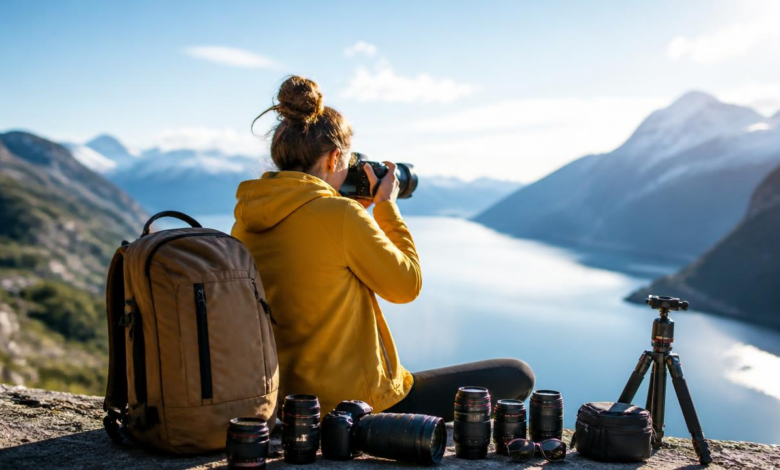
Travel offers fleeting moments: golden light, quiet market lanes, or shared laughter with locals. The right equipment helps preserve these memories without burdening your trip with excessive gear.
This guide focuses on essential photography gear for global explorers. It prioritizes strong image quality, practical packing, and reliable performance for your journeys. Choosing wisely matters more than carrying too much equipment.
Many travelers wonder about the necessary camera gear for international travel. The answer truly depends on your route, comfort, and the images you wish to create. A street photographer’s kit might differ from a hiker’s or a family traveler’s, even in the same destination.
Consider pairing your photo kit with practical tech from our guide to essential travel tech. This helps you look beyond just the camera, building a smoother overall travel system for your adventures.
Why Your Gear Matters: Balancing Quality, Portability & Durability
The best travel photography equipment balances image quality, portability, and durability. A camera that is too heavy might be left behind, missing valuable shots. If it is too fragile, worries about bumps or dust can overshadow your experience.
A lightweight travel camera often proves more effective in real-world scenarios, as it gets used more frequently. A smaller kit moves easily through airports, buses, crowded streets, and trails. This convenience often leads to better photos because your camera is always within reach for unexpected moments.
Durability is equally important for adventurers. A dependable travel camera should perform reliably in varying weather, during long walks, and with frequent packing. Weather sealing, robust battery doors, solid lens mounts, and a well-built bag all contribute to demanding trips.
Think about your travel pace too. Slower, culture-focused journeys may allow for a slightly larger kit. However, backpacking or overland routes significantly benefit from minimalism. For active trips, our article on packing for adventure abroad pairs well with choosing robust photography gear.
The Heart of Your Kit: Choosing the Right Camera Body for Travel
Mirrorless vs. DSLR for Travelers
For most modern travelers, mirrorless cameras represent the strongest choice for travel photography. They are typically lighter than DSLRs, offering excellent autofocus and high image quality in a compact form. They also integrate seamlessly into current workflows with apps and USB-C charging.
DSLRs still offer distinct advantages. Many boast strong battery life, proven durability, and comfortable handling with larger grips. If you already own and are familiar with a DSLR system, there might be little reason to switch purely for travel.
The key question is not which category is inherently superior. Instead, consider which camera allows you to shoot comfortably throughout long days. A camera that feels intuitive in your hands often proves more valuable than one with marginally better technical specifications.
Compact & Action Cameras: The Lightweight Advantage
A compact camera is ideal if you desire quality beyond a smartphone without interchangeable lenses. Premium compacts excel for food, street scenes, family trips, and quick moments where discretion is important.
Action cameras serve a different purpose entirely. If your plans include kayaking, diving, cycling, skiing, or rainy treks, a waterproof adventure camera might be more useful. These small cameras perform exceptionally when conditions are harsh, demanding both mobility and resilience.
Often, the smartest solution involves a main camera combined with a small action camera or smartphone as a backup. This flexible combination covers a wider array of situations without adding excessive weight to your load.
Full-Frame vs. APS-C: What’s Best for You?
Full-frame cameras typically provide outstanding low-light performance and a broader dynamic range. They are favored for night scenes, portraits, and serious landscape photography. However, this often comes with higher costs, larger sizes, and heavier lenses.
APS-C systems frequently offer an optimal balance for an affordable travel camera setup. They deliver strong image quality, lighter bodies, and compact lenses, making them practical for travel. Many explorers find this balance more advantageous than pursuing the largest sensor.
If you are building a beginner travel photography kit, select a camera you will enjoy carrying all day. A single body, one versatile lens, and a simple backup plan often outperform a complex kit that remains unused in your hotel room.
Seeing the World Differently: Essential Lenses for Your Journey
Wide-Angle Wonders for Landscapes
A wide-angle lens is superb for capturing mountains, coastlines, architecture, and interiors. It effectively conveys scale and setting, especially when the destination itself is the primary focus. For dramatic scenery enthusiasts, this might be your first specialist lens.
However, wide-angle lenses can lead to less thoughtful compositions if used carelessly. The most impactful travel images still require foreground interest, clean lines, and careful framing. A wide field of view assists, but it does not substitute for keen observation.
Travel Zooms: The Versatile Workhorse
If you prefer a single lens for most of your photography, a standard zoom is often the answer. Its versatile range allows seamless transitions from street scenes to portraits, or from intricate details to expansive landscapes, without constant lens changes.
This type of lens frequently forms the core of efficient travel photography equipment. It is particularly valuable in dusty or wet environments, where swapping lenses increases risk. Fewer lens changes mean cleaner gear and reduced stress during your travels.
Superzooms offer even greater convenience for certain trips. While they might not provide the absolute highest optical quality, they significantly reduce weight and decision fatigue. For many travelers, this unparalleled convenience results in more captured images than striving for perfection.
Fast Prime Lenses for Low Light and Character
A small prime lens is among the smartest additions to any photography kit. A 35mm or 50mm equivalent is excellent for food, portraits, street scenes, and evening strolls. It generally performs better in low light conditions and encourages more deliberate composition.
Prime lenses also help streamline your setup significantly. If you desire a lightweight travel camera system, pairing a small body with a compact prime lens can feel liberating. It makes photography less intrusive and more natural, particularly in bustling cultural settings.
Telephoto Options for Wildlife and Distance
While not every traveler requires a telephoto lens, it proves essential for safaris, mountain travel, sports, and creating compressed landscape shots. It also allows you to photograph distant subjects without disturbing them.
The primary drawback is size. Telephoto lenses can become heavy quite rapidly, so honestly assess their potential usage. If it only sees use once during a two-week trip, it might not justify the valuable space in your bag.
Beyond the Camera: Must-Have Accessories for Global Photographers
Stable Shots: Tripods & Monopods
A travel tripod is invaluable for night scenes, long exposures, waterfalls, self-portraits, and precise compositions. Seek a balance between stability, packability, and quick setup. The lightest option is not always the most effective if it struggles in windy conditions.
If long exposures are infrequent, a compact tabletop tripod or monopod might suffice. The goal is to align your support choice with your photographic style, rather than packing accessories simply because they appear professional.
Filters, Cleaning Tools, and Small Essentials
A circular polarizer stands out as one of the most useful photography accessories for travelers. It minimizes glare on water and glass, enhances sky depth, and can improve foliage vibrancy in bright daylight conditions. Neutral density filters are more specialized, but excellent for motion effects.
A cleaning kit is absolutely non-negotiable for travel. Dust, salt, fingerprints, and rain spots accompany travelers everywhere. Ensure you pack a blower, microfiber cloths, and a lens-safe cleaner. Small maintenance habits protect image quality more effectively than many people realize.
A remote shutter release is also helpful for long exposures or group photos. It is compact, inexpensive, and easily overlooked until you find yourself in need of it.
Audio-Visual Extras for Modern Creators
Some global explorers now create both photos and video content. If this describes your style, consider adding a compact microphone, a small LED light, or a mini gimbal. While not essential for everyone, these can significantly elevate your content.
Creators relying on devices and apps abroad should review our advice on global SIMs, eSIMs, and portable Wi-Fi. Reliable connectivity simplifies backup, sharing, and managing your remote workflow efficiently.
Protecting Your Investment: Bags, Cases & Waterproofing Solutions
Choosing the Right Travel Camera Backpack
A travel camera backpack should safeguard your gear without overtly advertising its value. Good padding is crucial, as are comfort, weight distribution, quick access, and a subtle design.
Look for adjustable dividers, weather resistance, and a laptop sleeve if necessary. Side or rear access designs enhance security in crowded areas, while sling styles offer faster access for urban photography. Your ideal bag depends on your movement style.
If theft prevention is a high priority, combine your bag choice with habits from our guide to smart travel security. Protecting camera gear during travel involves both equipment choices and vigilant behavior.
Hard Cases, Rain Covers, and Dry Bags
For more demanding trips, extra protection justifies the bulk. Hard cases are suitable for road expeditions, boat travel, and gear-intensive adventures. Dry bags are excellent when water crossings, beaches, or heavy rain are anticipated.
Rain covers deserve a place in nearly every bag. They weigh very little and can salvage a shooting day. Even weather-sealed gear has limitations, especially during prolonged storms or in humid, salty air environments.
A simple habit helps too: always avoid setting your bag directly on wet ground or dusty floors when possible. These small choices significantly extend the lifespan of your valuable equipment.
Powering Your Adventures: Batteries, Chargers & Storage
Extra Batteries and Flexible Charging
Battery anxiety is a common concern on the road. Cold weather, extended shooting days, video recording, and wireless transfers all deplete power faster than anticipated. Carry at least one or two spare batteries for your main camera, and more for remote destinations.
USB-C charging offers a significant advantage in modern travel photography equipment. It reduces cable clutter and allows you to recharge from a power bank, car charger, or adapter without needing a dedicated charger. If your gear supports it, travel becomes much simpler.
A universal adapter remains indispensable for international trips. Choose a reputable brand and always verify voltage compatibility for all your electronic devices to prevent damage.
Memory Cards, SSDs, and Cloud Backup
Storage is where many precious travel memories can be lost. Use reliable memory cards with the correct speed rating for your camera. Carrying several medium-capacity cards is often safer than one large card, as it mitigates the risk of a single-point failure.
For backup purposes, portable SSDs are an excellent choice. They are smaller and more durable than traditional spinning hard drives. Many travelers copy images daily and keep cards separate from the backup drive, preventing a single incident from compromising everything.
Cloud storage provides an additional layer of security when internet access is available. However, do not rely solely on it. If you are traveling off-grid or moving rapidly, physical backup remains your most dependable safeguard.
Software & Workflow: Enhancing Your Global Shots
A well-structured workflow is almost as crucial as your camera itself. Simple editing can correct exposure, refine colors, and help your images better convey the essence of a place. You do not need an advanced desktop setup to edit effectively while traveling.
Many travelers edit on a laptop or tablet using lightweight software that syncs across devices. Consistency is key. Establish a basic routine for importing, rating, backing up, and editing that aligns with your travel pace.
If you shoot extensively on the move, try to sort images each evening. Deleting obvious misses, flagging favorites, and backing up daily prevents digital clutter. This discipline also makes revisiting your photos more enjoyable later.
Consider workflow as an integral part of your travel planning, not an afterthought. Travelers who develop efficient systems often experience smoother journeys overall, enhancing their photographic output and enjoyment.
Packing Smart: Maximizing Space & Minimizing Weight
Packing photography gear effectively starts with brutal honesty. What items will you truly use? Which lens genuinely suits your style? Do you truly need a tripod every single day of your trip? Smart packing prioritizes practical gear over aspirational items.
For most journeys, one camera body, a versatile main lens, an optional small second lens or action camera, spare batteries, memory cards, a cleaning kit, and a compact support option will be sufficient. This setup covers far more than many first-time travelers anticipate.
Use padded inserts or cube systems for flexibility within a standard backpack. This approach makes your luggage less conspicuous and easier to adapt for other purposes during your trip. It also works well for travelers aiming to combine photography with carry-on only discipline.
How to Choose Photography Equipment for Backpacking
Backpackers must prioritize weight, flexibility, and easy access. Every item in your pack competes for space with clothing, water, documents, and personal comfort. This typically means opting for smaller camera bodies, compact travel lenses, and multi-use accessories.
Also, consider how often you will need to access your camera. If retrieving it is a hassle, you might miss your best photo opportunities. Chest clips, sling access, or a top-compartment camera insert can make a significant difference during active travel.
A durable yet low-profile setup often outperforms an expensive, bulky one. Backpacking rewards gear that is simple, reliable, and straightforward to protect from the elements and accidental damage.
Final Checklist for the Global Explorer: Don’t Forget This!
Before you embark on your journey, thoroughly test all your equipment. Update firmware, format memory cards, clean lenses, label batteries, and confirm all chargers are functional. Practice your backup routine at home to ensure its reliability on the road.
Then, review this essential travel photography kit list:
- Camera body you are proficient with
- One versatile primary lens
- One optional specialty lens or action camera
- Spare batteries and necessary charging cables
- Multiple memory cards for redundancy
- A lightweight support option, if needed
- A comprehensive cleaning kit
- Reliable weather protection for your gear
- A suitable travel camera backpack or padded insert
- A portable SSD or alternative backup solution
Finally, remember that the best camera for travel is ultimately the one that helps you stay present in the moment. Exceptional travel photography transcends mere sharpness or sensor size; it is about attention, curiosity, respect, and perfect timing.
The most compelling images usually come from travelers who observe keenly, move thoughtfully, and genuinely understand the places they visit. While gear supports this creative process, it can never replace the human element of observation and connection.
Therefore, build your kit around your actual habits and needs, not someone else’s aspirational list. Choose essential photography gear for global explorers that feels manageable, durable, and prepared for your unique kind of journey. Then, step out and begin telling the story only you can truly see.
For those eager to delve deeper, authoritative gear guidance can be found on DPReview and official manufacturer support pages. These resources can help you compare current models and accessories before making your purchases.