
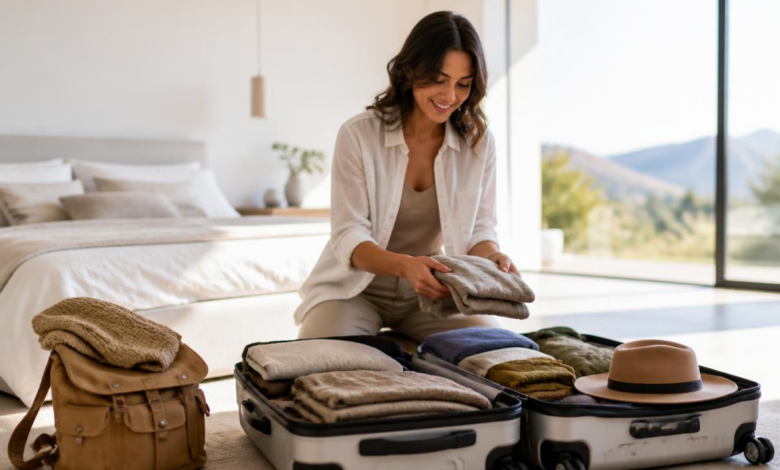
Embarking on a journey that spans varied climates can feel like preparing for multiple adventures within a single trip. Imagine a humid morning in Singapore, followed by a breezy layover in Istanbul, and finally a cool evening arrival in Berlin. This diverse range of conditions highlights the importance of seasonal shift packing, ensuring comfort and adaptability without excessive luggage.
Mastering Your Wardrobe for Global Adventures
A truly effective travel wardrobe prioritizes versatility over sheer volume. It involves selecting adaptable pieces that seamlessly transition across varying temperatures, activities, and cultural dress codes. For those already familiar with minimalist packing for international travel, this method enhances that philosophy, preparing you for genuine weather shifts rather than just lighter bags.
Contemporary journeys often encounter unpredictable weather patterns. While average temperatures offer a starting point, they rarely tell the full story. Sudden downpours, unexpected heatwaves, chilly evenings, or distinct microclimates can all emerge within a single itinerary. The most effective global climate packing strategy remains flexible, layered, and easily adjustable in real-time.
Essentially, seasonal shift packing centers on creating a cohesive system within a single bag designed for transitions. Rather than compiling separate collections for warm, mild, and cold destinations, you build a versatile ensemble of pieces that integrate effortlessly. This approach results in lighter luggage, streamlined outfit choices, and significantly reduced travel stress.
The aim is practical sophistication: fewer items yielding more combinations and superior performance. Consider breathable tops, effective insulating mid-layers, a reliable protective shell, and footwear suitable for diverse urban landscapes, airports, and fluctuating forecasts. For a style-focused application of this technique, exploring a travel capsule wardrobe guide can be an excellent resource.
Before placing any item into your suitcase, start by asking two crucial questions. What specific climates will you encounter, and which activities will define your days? These insights are more critical than the destination’s name alone. A vibrant beach city might still experience cool nights, and a summer mountain retreat could surprisingly demand extra insulation.
Understanding Diverse Climate Zones for Optimal Packing
Tropical Climates: Light and Quick-Drying Essentials
For journeys to tropical destinations, prioritize clothing that is light, highly breathable, and capable of rapid drying. Intense humidity can make even moderate temperatures feel oppressive, rendering heavy cotton uncomfortable. Fabrics like linen, lightweight merino blends, and technical synthetics generally perform superiorly, releasing moisture quickly for day-long comfort.
In these warm environments, opt for loose-fitting silhouettes, layers offering UV protection, and appropriate footwear such as sandals or well-ventilated sneakers. A breathable long-sleeve shirt can often prove more advantageous than a tank top, providing defense against sun, powerful air-conditioning, and insects. Additionally, a compact rain shell is invaluable where sudden downpours are frequent.
Temperate Zones: The Art of Versatile Layering
Temperate regions are ideal settings to hone your layering expertise. Mornings might begin cool, afternoons may warm considerably, and evenings often bring a pleasant breeze. Instead of packing numerous bulky sweaters, construct outfits using a light base layer, a versatile mid-layer such as a cardigan or overshirt, and an outer shell for protection against wind or rain.
This environment truly allows a versatile travel wardrobe to excel. A simple T-shirt can easily transition from daywear with travel trousers to an evening look under a blazer or knit. Should your itinerary blend urban exploration with natural landscapes, a guide on multi-environment journeys offers deeper insights into transitional outfit planning.
Arid & Desert Regions: Sun Protection and Evening Warmth
Dry heat presents a distinct set of challenges for travelers. While visible sweating might be less, the risks of dehydration and sun exposure significantly increase. For desert or arid regions, pack long, lightweight layers that effectively block the sun while still promoting airflow. Breathable trousers, a wide-brimmed hat, sunglasses, and a scarf provide superior protection.
A surprising element of arid climates is the dramatic temperature drop after sunset, often catching travelers unprepared. Even with extreme daytime forecasts, including one insulating layer for evenings is crucial. In environments with strong sun or blowing sand, closed shoes paired with lightweight socks generally offer more comfort than open footwear.
Polar & Alpine Environments: Essential Insulation and Waterproofing
Cold-weather destinations require a structured approach rather than simply packing bulky items. The thickest coat is not always necessary; instead, focus on a dependable system. Begin with a moisture-managing base layer, add a warm insulating layer, and complete it with a shell that repels wind and moisture. This combination proves more efficient than a single oversized jacket.
Should your itinerary involve severe cold, glacier exploration, high altitudes, or significant snowfall, specialized gear becomes indispensable. In such instances, general packing recommendations must be supplemented with specific planning for your destination. An extreme climate packing offers valuable assistance when your journey extends beyond typical winter travel needs.
Building a Core Versatile Travel Wardrobe
The Capsule Wardrobe Approach for Seamless Transitions
The most robust foundation for packing for different climates is undoubtedly the capsule method. A travel capsule involves carefully selecting a limited collection of garments that are all designed to harmonize. The majority of tops should complement most bottoms, and each layer must serve a distinct purpose, saving space and simplifying on-the-road outfit choices.
A practical guideline involves choosing one primary color family and a single accent color. Hues like navy, black, gray, beige, and olive typically blend effortlessly. You can then infuse personal style with a vibrant scarf, a distinctive shirt, or a unique accessory. This approach results in a wardrobe that feels coordinated yet far from repetitive.
Strategic Fabric Selection for Performance and Durability
The selection of fabrics frequently surpasses the importance of the sheer number of garments. Merino wool consistently proves to be one of the most effective materials for multi-climate packing tips, thanks to its temperature-regulating properties, odor resistance, and durability through repeated wear. Technical synthetics offer quick-drying benefits for active days, while linen excels in hot climates if you can embrace its natural wrinkles.
It is also wise to refrain from overpacking items that demand specialized care. A garment that wrinkles severely, dries slowly, or serves only one specific purpose might not warrant precious luggage space. Travelers seeking more responsible options can merge performance with sustainability by exploring eco-friendly packing gear and sustainable travel essentials.
Cohesive Color Palettes for Effortless Mixing and Matching
Developing a cohesive color palette transcends mere style advice; it is a fundamental packing strategy. When your chosen colors harmonize, a smaller collection of items can generate a significantly wider array of outfits. This allows you to pack fewer pieces—like one pair of trousers, two tops, an overshirt, and a compact sweater—and still feel appropriately dressed for many days without a uniform appearance.
This strategic approach also proves invaluable during unforeseen itinerary adjustments. Should laundry services be delayed, or sudden weather shifts necessitate a last-minute outfit change, coordinating pieces significantly reduce stress. Practically speaking, a neutral color palette enhances the versatility and efficiency of your entire packing list for changing climates.
Your Step-by-Step Guide to a Multi-Climate Capsule
To construct a capsule wardrobe specifically for global transitions, prioritize your itinerary over your current closet. Document the hottest and coldest expected temperatures, the wettest conditions, and the most formal activity scheduled on your route. These four critical points will effectively define your wardrobe’s boundaries, ensuring focus on genuine necessities.
Subsequently, select your base layer essentials. For most journeys, this translates to 3 to 5 tops, underwear sufficient for your laundry cycle, and 2 to 3 pairs of socks suitable for your chosen footwear. If cold weather or active days are anticipated, incorporate at least one merino or technical base layer top, wearable alone or beneath other layers.
Next, introduce your bottom layers. For many trips, two or three pairs suffice: perhaps one pair of travel trousers, a versatile casual or smart option, and one climate-specific item like shorts or thermal leggings. Given that bottoms occupy more space than tops, versatility is paramount. Darker shades tend to conceal wear more effectively and offer broader pairing possibilities.
Following this, construct your complete layering system. This should include one mid-layer, such as a cozy fleece, a stylish cardigan, or a lightweight knit, alongside an outer shell for protection against wind and rain. If cold weather is on your itinerary, integrate a compressible insulated jacket or vest. This forms the core of interseasonal packing: every layer should function both independently and collaboratively.
Finally, conduct a thorough test of your planned outfits before embarking on your trip. Lay out all chosen items and assemble complete looks for each significant activity. If a particular item only serves a single purpose, reconsider its inclusion. This straightforward verification is among the most effective ways to learn how to pack a versatile wardrobe for international travel efficiently.
Adapting Your Packing for Various Activities
Most journeys involve more than just climate changes; they also encompass various roles and activities. An itinerary might include business meetings, museum visits, train travel, invigorating hikes, and elegant dinners. To navigate these diverse demands effectively, pack garments that effortlessly adapt. A button-down shirt, for instance, can appear sophisticated in a city or casual over a T-shirt by the coast.
When preparing for business travel, emphasize wrinkle-resistant garments and a single pair of shoes that offer both elegance and comfort. For adventure-focused trips, prioritize durability, reliable traction, and quick-drying layers. For leisure-heavy itineraries, comfort is paramount, but including one slightly more refined outfit can avert frantic last-minute shopping if plans unexpectedly shift.
Smart Packing Techniques and Multi-Functional Items
Maximizing Space with Rolling, Folding, and Compression
Even the most thoughtfully curated wardrobe can be undermined by a disorganized bag. Utilize packing cubes to neatly compartmentalize items like tops, underwear, activewear, and weather-specific gear. Rolling often proves effective for soft garments such as T-shirts and knitwear, while precise folding can better preserve structured pieces. Compression cubes are particularly beneficial for bulkier sweaters and insulated layers.
Whenever feasible, wear your bulkiest items during transit. Donning a jacket, boots, or heavier trousers can liberate substantial space within your luggage. This enduring strategy is a classic lightweight travel packing trick, still highly effective. It is especially helpful when airline weight restrictions are stringent or if your journey involves multiple changes in transportation.
Choosing Multi-Functional Essentials for Every Journey
Certain items consistently prove their worth on every journey. A versatile scarf, for instance, can offer warmth, sun protection, ensure modesty at sacred sites, or even serve as a makeshift travel pillow. A lightweight button-down shirt transitions seamlessly from a primary shirt to an overshirt to a beach cover-up. Black leggings are similarly adaptable, functioning as sleepwear, a comfortable flight layer, or a base layer.
Footwear demands particular discretion when packing. Many travelers tend to overpack shoes, as each pair often feels justifiable when considered individually. Realistically, two pairs typically suffice for most journeys: a primary comfortable walking shoe and a secondary option for relaxation, more formal occasions, or warmer climates. For itineraries rich in outdoor activities, prioritize superior grip and weather resistance over mere style diversity.
Beyond Apparel: Essential Travel Comforts for Any Climate
While an effective wardrobe is crucial, it represents only one facet of preparation. Climate transitions invariably impact your skin, hydration levels, overall health, and daily comfort. Essential items like a reusable water bottle, fundamental medications, sunscreen, lip balm, and a compact moisturizer are often as vital as selecting the perfect shirt. Abrupt temperature shifts can stress your body, even with appropriate clothing.
Weather research should be a continuous process, extending beyond initial pre-trip planning. Consult reliable forecast sources or destination-specific meteorological services before each significant leg of your journey. For travelers moving swiftly between regions, a final check of the forecast can significantly help in adjusting your day bag and proactively avoiding uncomfortable surprises.
Thoughtful accessories complete this comprehensive system. Items such as sunglasses, a packable cap, compact gloves, and a small umbrella or shell can dramatically enhance your comfort without adding substantial weight. Integrating wardrobe planning with fundamental health and hygiene essentials contributes to a much more resilient and prepared travel routine.
Conclusion: Your Blueprint for Effortless Global Travel
The most effective adaptable travel clothes are not necessarily the trendiest or the priciest. Instead, they are garments that perform reliably through movement, varied weather, and repeated wear. By packing for transitions rather than fixed seasons, you unlock a new level of travel freedom. This shift moves you from reacting to forecasts to traveling with a proactive system ready for change.
This embodies the true advantage of building a travel capsule wardrobe for diverse climates. You benefit from significant space savings, a reduction in decision fatigue, and often a more mindful consumption approach. With experience, you will also discover precisely which fabrics, fits, and combinations best complement your unique travel style, simplifying preparation for every subsequent journey.
If you are in the process of refining your packing routine, begin with small, manageable steps. Consider upgrading one layer, swapping a single-use item for a versatile alternative, and observing which garments you wear most frequently. This straightforward process forms the bedrock of an expert guide to seasonal wardrobe planning for year-round travel, effective whether you journey monthly or just a few times annually.
Explore additional insightful packing guides on Happy Day Turismo to further enhance your travel preparation. Discover practical tips and share your own seasonal shift packing strategies with our community.
Frequently Asked Questions About Seasonal Shift Packing
How do I pack for both hot and cold climates on one trip?
To effectively pack for both hot and cold climates on a single journey, adopt a comprehensive layering system rather than distinct outfits for each destination. Begin with breathable base layers for warm weather, incorporate a versatile mid-layer for milder conditions, and include one compact insulating or weatherproof outer layer for cold or wet days. This strategy minimizes luggage while accommodating diverse temperatures.
What are the best fabrics for a multi-climate travel wardrobe?
For a multi-climate travel wardrobe, merino wool, technical synthetics, linen, and Tencel-style fabrics are frequently excellent selections. These materials generally excel at temperature regulation, dry more rapidly than conventional heavy cotton, and pack with greater ease. The optimal blend of fabrics hinges on your specific itinerary, with performance and versatility serving as key decision drivers.
How many clothes are truly needed for a changing-climate trip?
For numerous trips, a compact capsule wardrobe often proves sufficient: typically a few tops, two or three bottoms, one mid-layer, a protective shell, and essential climate-specific accessories. The precise quantity will depend on your access to laundry, anticipated activity levels, and any formality requirements. The emphasis should be on maximizing outfit combinations rather than simply counting individual items.
Is seasonal shift packing the same as minimalist packing?
While `seasonal shift packing` and minimalist packing share common ground, they are not identical concepts. Minimalist packing primarily aims to reduce the sheer volume of items carried. In contrast, seasonal shift packing specifically focuses on enhancing adaptability across varying weather conditions and transitions. In practical application, the most effective approach intelligently merges both philosophies: packing less while ensuring every item offers maximum utility.
What is the most common packing mistake for different climates?
The most frequent error in packing for diverse climates is basing choices on a destination’s perceived image rather than its actual conditions. Travelers might conceptualize “beach,” “Europe,” or “winter” and overlook crucial local nuances such as indoor heating, altitude effects, unexpected rain, or significant evening temperature drops. Thoroughly researching current forecasts and employing a layered packing strategy typically resolves this common issue.