
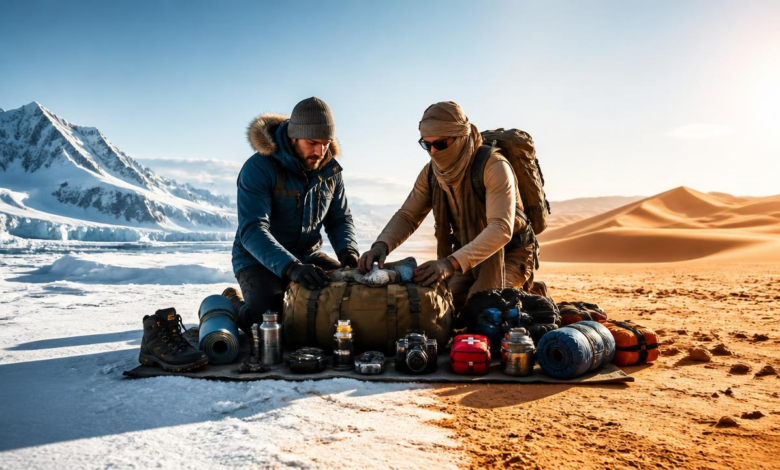
Packing for extreme climates is far more than just fitting items into a backpack. In freezing Arctic conditions, a minor clothing error can cause dangerous heat loss. Conversely, in vast deserts, an inadequate hydration plan can quickly escalate into a serious emergency. When facing harsh environments, every piece of gear serves a vital purpose, influencing safety, comfort, and mobility.
This guide explores the essential gear for two contrasting extreme environments: polar cold and scorching desert heat. If you are preparing an expedition packing list for ice, sand, wind, and isolation, the goal is not to pack excessively. Instead, it is about packing
smarter, choosing durable equipment that truly meets the landscape’s demands.
For a broader foundation before specialized trips, our guide on packing for adventure travel abroad connects these advanced strategies to general trekking setups. However, for extreme routes, your system requires a much higher margin of safety and resilience.
Packing for Extreme Climates: Arctic vs. Desert
The Arctic and desert environments, though seemingly opposite, present similar challenges for travelers. Your body is under constant stress in both. In freezing regions, your energy focuses on retaining warmth, managing moisture, and protecting against wind.
In arid regions, energy is directed towards cooling, maintaining hydration, and shielding your skin and eyes from intense sun exposure. A useful approach to extreme climate packing is to prioritize risk management over specific destinations.
Key Risks in Extreme Environments
In the Arctic, primary risks include hypothermia, frostbite, whiteout navigation, and gear freezing when wet. In the desert, dangers encompass dehydration, heat exhaustion, severe sunburn, disorientation, and running out of water far from help.
Therefore, extreme weather gear must be highly functional, not just technically impressive. Fabric choices, insulation, waterproofing, ventilation, and pack organization are all critical factors. The right jacket in the wrong climate can be as unhelpful as incorrect footwear on any trail.
Arctic Expedition Essentials: Conquering the Cold
What to pack for an Arctic expedition begins with recognizing that cold is only one aspect of the challenge. Wind, perspiration, snow glare, frozen water sources, and prolonged exposure all influence your cold weather gear list. Arctic expedition gear must generate warmth without trapping moisture, and it must perform reliably after days of strenuous use.
Mastering the Layering System
Your layering system forms the core of Arctic survival gear. It is crucial for adapting to changing conditions and activity levels. This flexible approach allows you to regulate your body temperature effectively, preventing both overheating and chilling.
Base Layers: Managing Moisture
Begin with a moisture-wicking base layer, ideally made from merino wool or a technical synthetic fabric. This layer should fit snugly against your skin to efficiently move sweat away before it can cool and cause a chill. Cotton is unsuitable here, as it loses insulating value rapidly when wet.
Mid Layers: Insulating for Warmth
Mid layers provide essential insulation for Arctic conditions. Options include fleece jackets, insulated synthetic tops, and lightweight down pieces. The choice depends on your activity level; vigorous movement generates significant body heat. Often, several lighter insulating layers are more versatile than one bulky item, allowing easy adjustment without soaking your clothes.
Outer Shell: Protection from Elements
Your outer shell must be windproof, waterproof, and breathable. This means selecting a serious shell jacket and pants designed for severe exposure, not just a casual winter coat. Snow, spindrift, and freezing winds can exploit any weak points in zippers, cuffs, and seams. Choose outerwear with ample room for movement and to fit over your insulation layers.
Expedition Parka: Essential for Stillness
An expedition parka differs from your active shell. It is a large, heavily insulated layer worn during breaks, in camp, or when activity stops. This piece is often critical, as many cold injuries occur during periods of inactivity. Strong insulation, an adjustable hood, and generous length make a significant difference for comfort and safety.
Footwear and Hand Protection Strategies
Footwear is a common area for expensive errors in Arctic packing. Expedition boots for severe cold should be highly insulated, weather-resistant, and spacious enough to accommodate thick socks without constricting circulation. Tight boots reduce blood flow, making feet colder. Removable liners are especially practical for drying gear in a tent or hut.
Sock Systems: Dry and Comfortable
Your sock system should prioritize both warmth and moisture control. Many travelers use a thin liner sock beneath a thicker wool or synthetic outer sock. Bring enough pairs to rotate regularly, ensuring your feet stay dry. Dry feet are crucial for comfort, preventing blisters, and maintaining heat retention over multi-day treks.
Hand Protection: Gloves and Mittens
Hand protection requires a three-part system: liner gloves for dexterity during quick tasks, insulated gloves for active movement, and expedition mittens for extreme cold or emergencies. Mittens are less convenient but generally warmer due to fingers sharing heat. Always pack backup handwear, as wet gloves can quickly become a serious problem.
For advice on protecting essential documents and electronics in remote areas, see Smart Travel Security: Essential Anti-Theft Gear and Practices for Peace of Mind Abroad. Security is vital not only in cities but also when your expedition gear includes irreplaceable devices.
Shelter and Sleep Systems for Polar Regions
Shelter systems in polar terrain must provide robust protection against both wind load and snow accumulation. A true four-season tent features stronger pole structures, more secure guy-out points, and fabrics designed for severe exposure, outperforming lightweight summer shelters. In extreme cold, your shelter is more than just a place to sleep; it is a repair station, a cooking refuge, and an emergency barrier.
Sleeping Bags: Battling Extreme Lows
A sleeping bag for polar travel must be rated significantly below the expected nighttime lows. Down insulation offers an excellent warmth-to-weight ratio but requires careful moisture management. Synthetic insulation is usually heavier but can be more forgiving in damp conditions. Many experienced travelers combine a high-quality sleeping bag with a liner to fine-tune warmth and protect the interior.
Sleeping Pads: Crucial Ground Insulation
Sleeping pads often receive less attention than they deserve, yet frozen ground rapidly drains body heat. Effective ground insulation is an essential part of an extreme cold packing list. Using a closed-cell foam pad beneath an insulated inflatable pad adds critical reliability and extra R-value. If one system fails, the other still offers vital protection.
Nutrition and Hydration in Frigid Zones
Hydration can be surprisingly challenging in the Arctic, as people often drink less when they do not feel hot. Water bottles can freeze, hydration hoses ice over, and melting snow requires time and precious fuel. Wide-mouth insulated bottles are often more reliable than bladders in deep cold. Keep containers protected and avoid leaving them exposed overnight.
Calorie-Dense Food: Fueling Your Body
Food should be calorie-dense, easy to prepare, and practical to handle with gloved hands. Cold weather significantly increases energy demands, making fats and complex carbohydrates especially valuable. Frequent hot drinks and warm meals boost both morale and body temperature. This highlights why stove reliability is as crucial as meticulous raw food planning.
For technical safety information on cold conditions, ice, and polar weather patterns, consult authoritative resources such as the U.S. National Weather Service. Official weather guidance should always inform your route planning, regardless of your group’s experience level.
Desert Adventure Gear: Thriving in the Heat
Desert adventure essentials center around water, shade, airflow, and managing your pace. Heat is not the sole adversary; solar radiation, reflective surfaces, blowing sand, and significant day-to-night temperature shifts create a complex environment. The best gear for Sahara desert trekking or any major arid route supports consistent hydration, robust skin protection, and efficient movement.
Sun Protection and Lightweight Apparel
Many envision minimal desert clothing, but effective hot weather hiking gear often covers more skin, not less. Loose, long-sleeved shirts, breathable long pants, and UPF-rated fabrics reduce direct sun exposure while still allowing ventilation. Light colors generally reflect more sunlight and can feel cooler in exposed terrain.
Material Choices: Breathability and Durability
Material selection is important. Technical nylon and polyester fabrics dry quickly and manage perspiration more effectively during active movement. While some natural fibers can work in low-intensity settings, active desert travel usually benefits from superior moisture management and durability. Fast-drying clothing also helps reduce chafing, which becomes a greater concern in heat and sweat.
Nighttime Warmth: Overlooked Layer
A light insulating or wind-resistant layer remains important for your desert packing list. Temperatures can drop sharply after sunset, especially in open desert basins. This is often an overlooked aspect of extreme temperature gear planning. Travelers frequently prepare for heat but forget that discomfort, poor rest, and even mild cold can impact overnight recovery.
Critical Hydration for Arid Environments
The most important desert survival principle is straightforward: carry significantly more water than you anticipate needing. The exact volume depends on the route, season, activity level, support, and water access points. Active travelers in hot conditions often require several liters per day, plus an emergency reserve. Underestimating water needs is among the most perilous mistakes in arid travel.
Redundant Solutions: Bottles and Reservoirs
Utilize redundant hydration solutions. A large hydration reservoir facilitates frequent sipping while walking, while bottles offer backup, easier monitoring of consumption, and a way to keep electrolyte mixes separate from plain water. Insulated containers help minimize heat gain. Allocating water by time or distance can also prevent early overconsumption.
Water Purification: Essential for Safety
Water purification for desert adventures is crucial whenever your route includes springs, tanks, or uncertain resupply points. Sediment, livestock contamination, and microorganisms remain genuine concerns in dry regions. For practical treatment advice, the CDC travel water safety recommendations offer useful baseline guidance that complements local route research.
Electrolytes: Replenishing Minerals
Electrolytes are also important. Heavy sweating depletes sodium and other vital minerals, and simply replacing water may not be sufficient during prolonged, hot efforts. Powder mixes or tablets are lightweight gear for extreme heat and easy to pack. They support better performance and reduce the risk of heat-related fatigue, though they do not replace smart pacing.
Footwear, Sand Management, and Desert Camp
Footwear in the desert must balance breathability, support, and effective debris management. Trail runners suit some routes, while mid-cut hiking boots offer more structure and help keep sand out. Gaiters are particularly useful on sandy trails, dunes, and rocky washes. They limit debris entry, reduce friction, and maintain comfort over long distances.
Eye and Head Protection: Shielding from Sun and Sand
Eye and head protection are non-negotiable desert adventure essentials. A wide-brimmed hat, neck coverage, and high-quality sunglasses with UV protection are fundamental. Fine sand and intense glare can exhaust you faster than many travelers expect. A bandana or buff provides flexible protection against dust and sun, and offers quick evaporative cooling when dampened.
Desert Shelter: Shade and Ventilation
Desert shelter systems prioritize ventilation, shade, and anchoring over storm insulation. A well-ventilated tent or tarp setup promotes airflow, but your campsite strategy is equally important. Seeking shade during the hottest part of the day can conserve energy and water. In loose ground, sand stakes or deadman anchor techniques are more effective than standard pegs.
Essential Safety and Navigation Across All Expeditions
Whether traversing ice or dry basins, your navigation tools should never rely solely on a single device. A GPS unit is highly useful, but batteries can fail, screens can break, and weather conditions may affect operation. Always carry a map and compass, and ensure you know how to use them proficiently in the field.
Reliable Navigation Tools
For remote travel, a satellite messenger or personal locator beacon adds a critical communication layer, enabling you to alert others in an emergency. These devices provide peace of mind and are vital for safety beyond the reach of standard mobile networks.
Tailored First Aid Kits
Your first aid kit must be tailored to the specific environment, not just a generic checklist. Arctic kits should include supplies for blister care, trauma response, and addressing extreme cold injuries. Desert kits need to support dehydration awareness, heat illness response, blister treatment, and minor wound care in dusty conditions.
Always include personal medication, and ensure every member of your group knows the location of core medical items. This preparedness allows for quick action in critical moments, potentially preventing small issues from escalating into major problems.
Critical Emergency Gear
Headlamps, repair kits, fire-starting tools, signaling devices, and emergency shelter are essential for both Arctic and desert loadouts. In cold regions, keep spare batteries warm inside your clothing to preserve their charge. In deserts, protect electronics from dust and extreme heat.
Search and rescue professionals consistently share the same lesson: competence is the best safety tool. Practice shelter setup, stove use, navigation, and water treatment before departure, not when your resilience is already being tested by challenging weather. Knowing your gear flawlessly builds confidence and capability.
Universal Principles for Extreme Climate Packing
Extreme climate packing begins with establishing priorities, not simply acquiring products. First, list your mission-critical categories: shelter, sleep, insulation, hydration, navigation, medical, and emergency communication. Then, build your gear around these essentials.
Prioritizing Critical Gear
This systematic approach keeps your expedition packing list functional and reduces the temptation to overload your pack with low-value extras. Focusing on these core needs ensures that you have the foundational elements for survival and comfort in demanding environments.
Balancing Weight and Safety
Weight management is important, but saving grams should never compromise safety. Ultralight strategies are most effective when conditions allow for little margin of error. In severe cold or isolated desert routes, durable equipment often takes precedence over minimalism, providing reliability when it matters most.
However, smart organization can still reduce bulk. Compression sacks, dry bags, and category-based packing help keep systems accessible and protected. Efficient packing enhances usability and ensures that essential items are readily available.
Strategic Redundancy
Redundancy should be selective. You do not need two of every item, but you do need backups for critical survival tools and decision-making aids. Consider fire starters, light sources, navigation tools, water treatment methods, and gloves.
When a critical item fails in a remote climate zone, even a small backup can prevent a larger emergency. This strategic duplication provides a crucial safety net in challenging environments, allowing you to continue your journey or manage an unforeseen situation.
Sustainable Gear Choices
Sustainability is also an important part of the conversation. High-quality gear tends to last longer, perform better, and generate less waste over time. If you wish to align adventure readiness with lower-impact choices, explore The Sustainable Traveler’s Packing List: Eco-Friendly Gear for Conscious Adventures. Responsible purchasing supports both performance and environmental stewardship.
Advanced Preparation and Gear Maintenance
Test all your gear thoroughly before your trip. Wear your layering system during training hikes. Sleep in your full cold-weather setup at safe, local campsites. Practice filtering water, securing tents in difficult ground, and accessing essential items while wearing gloves.
Functional Packing Organization
A gear problem discovered at home is a valuable lesson. The same problem encountered in the field, however, may become a hazard. This pre-trip diligence builds confidence and ensures your equipment performs as expected when it counts most.
Pack by function, rather than by object type. Keep emergency items consistently accessible in the same location. Store sleep gear within waterproof protection. Separate wet and dry layers. In desert environments, isolate electronics from dust.
In polar conditions, protect batteries and fuel from extreme temperatures. Efficient access can save precious time when weather conditions shift suddenly. This methodical approach to packing ensures that every item is where you need it, when you need it.
On-Trip Gear Maintenance
Maintenance is crucial both before and during your trip. Dry liners, socks, and gloves whenever possible. Shake sand out of footwear and zippers regularly. Inspect tent anchor points daily. Check straps, buckles, and stove parts before they fail.
Extreme climate packing is truly a continuous system of preparation, active use, and ongoing upkeep. This diligent approach ensures your gear remains reliable throughout your expedition, contributing to overall safety and comfort in demanding environments.
Final Reflections on Weather Resilience
Arctic expedition gear and desert adventure essentials differ significantly, yet both demand the same core discipline: understand your environment, know your gear intimately, and prepare for potential problems proactively. The most effective extreme climate packing strategy is not based on trends.
Instead, it is built upon fundamental function, strategic redundancy, and realistic self-assessment of your capabilities. If you are planning your next demanding route, begin with a written expedition packing list and refine it after each training outing.
Small adjustments in layering system design, hydration solutions, or shelter systems can have a profound impact in the field. This iterative process is how experienced travelers evolve from merely carrying equipment to truly building robust weather resilience. Prepare diligently and adventure safely.